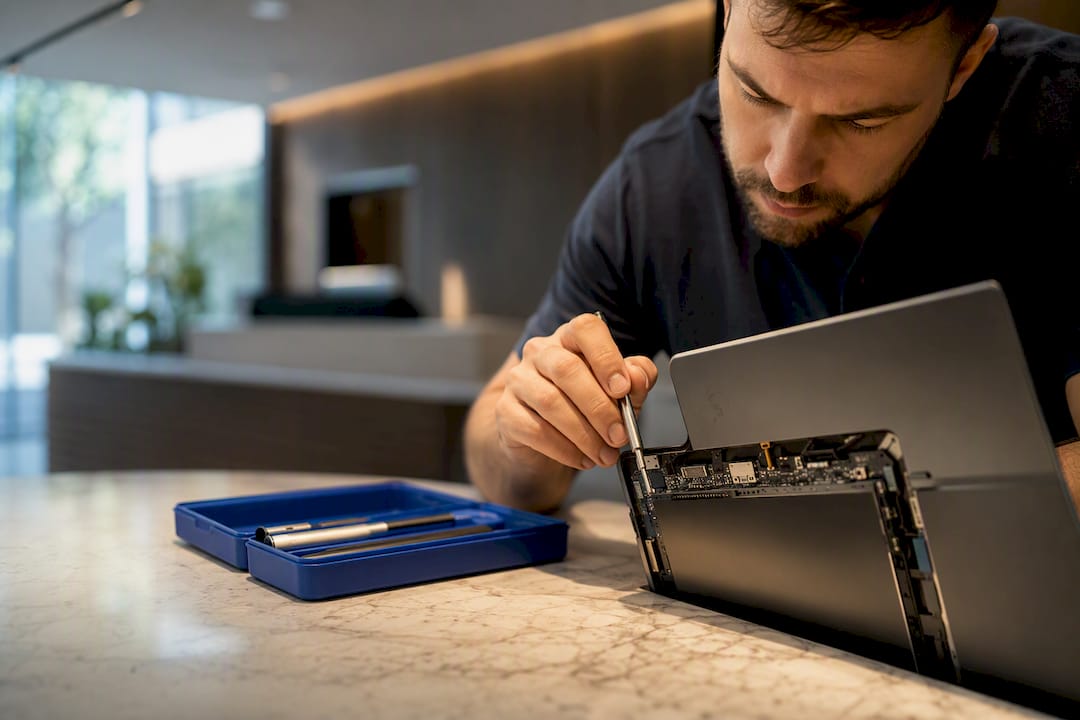
A cracked phone screen fixed on-site typically runs $100 to $300, a battery swap $50 to $100, and a laptop repair averages $119 to $169 nationally. Tablet screens can cost a moderate to higher price range depending on the model. Most technicians charge a $20 to $50 diagnostic or call-out fee, and that fee usually gets applied toward the repair once you agree to move forward. Same-day on-site visits across these categories often feature upfront pricing and no hidden add-ons.
TL;DR:
- Repair costs for cracked phone screens range from $100 to $800+, depending on the model and technology, with foldables being the most expensive.
- Water damage repairs can cost between $100 and over $400, especially if the liquid has reached the logic board, requiring microsoldering.
- On-site diagnostic fees of $20 to $50 are typically credited toward the final repair cost if approved promptly, and same-day repairs often have transparent upfront pricing.
- Repair estimates vary significantly based on parts, labor complexity, multiple faults, and urgency, with OEM parts and specialized skills raising costs.
- Repair decisions should consider device value and importance of minimizing downtime, especially for business-critical devices, rather than just the initial repair price.
Table of Contents
- How Much Does Device Repair Cost by Device Type?
- What Makes One Repair Quote Higher Than Another?
- Typical On-Site Repair Cost Ranges at a Glance
- What Happens During an On-Site Repair Visit?
- Should You Repair or Replace the Device?
- A Technician’s Notes From Hundreds of On-Site Jobs
- Do Emergency or After-Hours Repairs Cost More?
- Does Repair Cost Differ Between Brands or Operating Systems?
- The Real Cost Question Isn’t the Number, It’s the Certainty
- Book Same-Day On-Site Repair With Repair Genius
- Sources
How Much Does Device Repair Cost by Device Type?
The device in front of you, not some universal price sheet, decides what a fair quote looks like. Here’s how the numbers actually break down once a technician is standing at your desk or kitchen table.
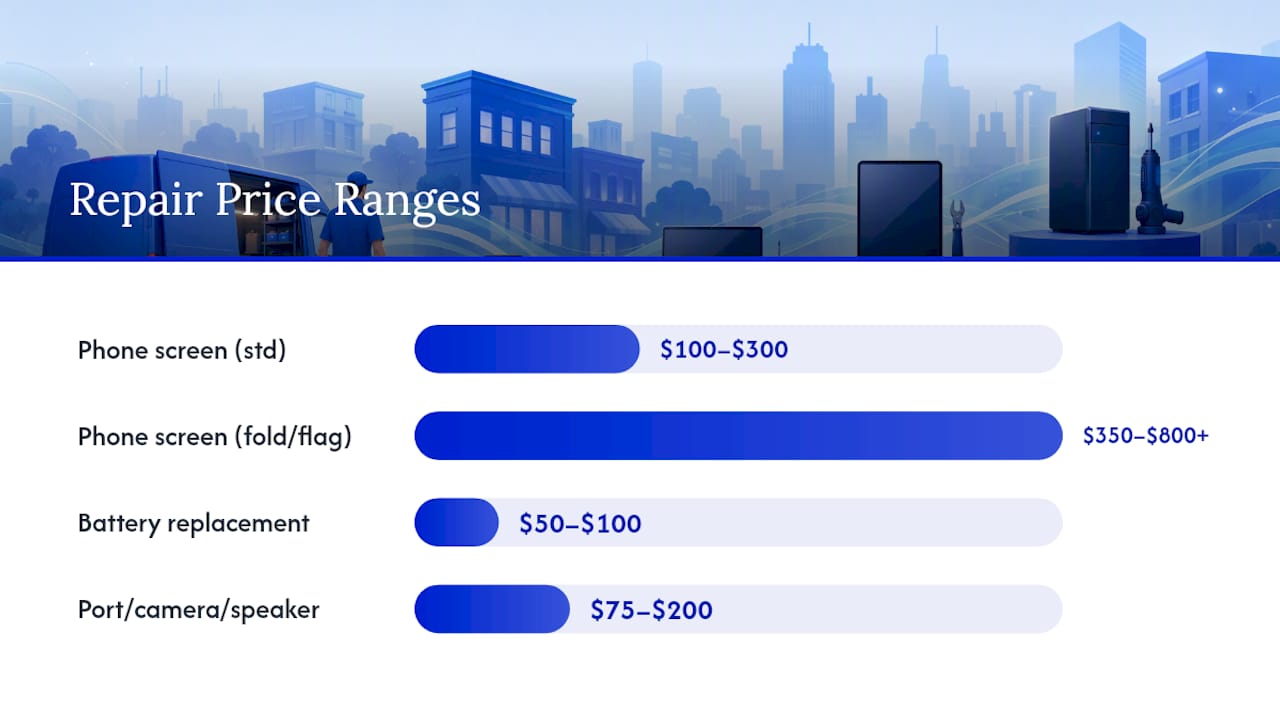
Phones carry the widest spread because screen technology varies so much between models. A standard LCD or basic OLED screen replacement typically costs between $100 and $300, while foldable or flagship OLED assemblies can push past $350 to $800 because the parts themselves are scarce and expensive to source. Battery replacements are the cheapest fix on the board: $50 to $100 at independent shops, though going through a manufacturer’s official service channel usually costs more. Charging ports, camera modules, and speaker repairs generally fall into a moderate price range, influenced by component integration complexity.
Water damage is the wildcard. A basic cleaning and dry-out might only run $100 to $150, but if liquid reached the logic board, costs can climb past $400 once microsoldering enters the picture. There’s no reliable way to quote water damage over the phone. It has to be opened up first.
Tablets follow similar logic to phones but skew pricier because screens are bigger and glass bonding is more involved. Standard tablet screens cost a moderate amount, while premium tablets like iPad Pro models tend to be priced higher.
Laptops are a different animal entirely. National averages for computer repair sit around $119 to $169, covering common jobs like malware removal, RAM upgrades, and basic diagnostics. Screen replacements and hardware failures push well above that baseline, sometimes into the low hundreds just for parts, since laptop screens vary widely by model and availability.
- Phone screen: $100–$300 (foldables $350–$800+)
- Phone battery: $50–$100
- Charging port / camera / speaker: $75–$200
- Water damage: $100–$400+
- Tablet screen: $120–$350
- Laptop repair average: $119–$169
What Makes One Repair Quote Higher Than Another?
Two customers with the same broken screen can get quotes $150 apart, and it’s almost never a bait-and-switch. It comes down to five variables.
Parts drive the biggest swing. OEM components cost more than aftermarket ones, and if your device is a few years old or a less common model, sourcing an original part at all can add a premium. Aftermarket parts fill the gap but vary in quality, so it’s worth asking which one you’re getting.
Labor reflects the job’s complexity, not just time spent. A technician working on a glued-shut foldable or a board that needs microsoldering is charging for specialized tools and training, not minutes on the clock.
Multiple faults stack. A phone with both a cracked screen and a failing battery costs more than either repair alone, since labor time and part counts both climb.
On-site urgency matters too. Same-day service that requires sourcing a part on short notice costs more than a scheduled next-day visit where the part is already in hand.
- OEM parts cost more than aftermarket, especially for older or rare models
- Specialized labor (foldables, sealed assemblies, board-level work) raises the quote
- Combined faults increase both parts and labor totals
- Rush sourcing for same-day parts adds to the price
- Diagnostic fees are often waived or credited if you approve the repair
Pro Tip: Ask upfront whether the diagnostic fee gets applied to your final bill if you approve the repair on the spot. Most reputable technicians do this automatically, but it’s worth confirming before they start.
Typical On-Site Repair Cost Ranges at a Glance
| Repair Type | Typical On-Site Range |
|---|---|
| Phone screen replacement | $100–$300 |
| Phone battery replacement | $50–$100 |
| Charging port repair | $75–$200 |
| Water damage (basic clean) | $100–$150 |
| Tablet screen replacement | $120–$350 |
| Laptop screen replacement | $150–$300 |
| Laptop virus/malware cleanup | $75–$200 |
| Laptop diagnostics/general repair | $119–$169 |
These ranges are meant for budgeting, not a final invoice. Every quote depends on your exact device model and what the technician finds once they run diagnostics on-site.
What Happens During an On-Site Repair Visit?
Booking on-site service isn’t a mystery, but knowing the sequence helps you avoid surprise costs.
- The technician arrives and walks through basic safety and data-handling steps with you.
- They run a diagnostic, usually costing $20 to $50, often supported through Local screen sharing at full speed to confirm the actual fault.
- You get a written quote before any work begins.
- If you approve and the part is on hand, the repair happens immediately, often within 30 to 90 minutes depending on the job.
Diagnostic fees are commonly credited toward the repair once you say yes, which is worth confirming before the technician starts working. “Same-day” typically means the part is already stocked or can be picked up locally within hours; anything requiring a special order becomes next-day. Before the technician leaves, ask three things: where the replacement part comes from, what warranty covers parts and labor, and what steps they’re taking to protect your data during the repair. A structured on-site workflow avoids the back-and-forth that drags out shop drop-offs.
Should You Repair or Replace the Device?
The classic rule of thumb: if the repair costs less than about 50% of the device’s current value, repair wins. Above that threshold, replacement usually makes more financial sense, especially for older hardware that’s likely to need another fix soon anyway.
But for a business device, sticker price isn’t the whole story. Downtime costs money too, and a device holding client files, point-of-sale software, or scheduling tools might be worth repairing even above the 50% mark simply because replacing it means reconfiguring everything from scratch. Board-level repairs and multi-fault jobs are the exception. Once you’re paying for microsoldering plus a screen plus a battery, that math flips fast toward replacement.
- Repair generally wins when cost is under roughly 50% of device value
- Downtime and stored data can justify repairing above that threshold for business-critical devices
- Multiple simultaneous faults or board-level damage often tip the scale toward replacement
- Devices under AppleCare+ or Samsung Care+ make repair the obvious cheaper choice
- Water damage severity is unpredictable, so get a diagnostic before deciding either way
Coverage like AppleCare+ or Samsung Care+ changes this calculation entirely, often dropping a $300 repair down to a small deductible.
A Technician’s Notes From Hundreds of On-Site Jobs
After many years and numerous on-site calls, certain patterns repeat constantly. Screen and battery jobs cluster tightly around the ranges above, and the biggest source of customer frustration isn’t price. It’s uncertainty about what the final bill will be. That’s why every visit starts with a diagnostic and a written quote before any work begins, and why that diagnostic fee gets applied to the repair if you move forward.
Technician certification and a warranty on parts and labor often matter more to repeat business customers than shaving a few dollars off the estimate. If you want faster service, back up your device beforehand, charge it above 30%, and have your passcode ready. Small steps, but they shave real minutes off a visit.
Do Emergency or After-Hours Repairs Cost More?
Yes, and the reason is straightforward. After-hours or emergency on-site visits pull a technician away from a normal schedule, and rushing a part to your location outside business hours adds cost on top of the base repair price. Expect a premium anywhere from an extra $20 to $75 on top of standard pricing, depending on how late the call comes in and whether a part needs to be sourced same-night.
For a small business, that premium is often worth paying. A point-of-sale tablet down on a Saturday afternoon or a laptop that won’t boot the morning of a client presentation isn’t a problem that can wait until Monday. The math that matters here isn’t the repair price alone. It’s the cost of the device being offline versus the extra fee for getting it fixed immediately.
Not every repair needs the emergency tier. If the device still functions, even in a degraded state, scheduling a next-business-day visit usually costs less and gets the same quality of work. Save the after-hours premium for situations where downtime is actively costing you money or blocking something time-sensitive. Ask about emergency repair options before assuming you need one. Some technicians can fit an urgent case into the same day without the after-hours surcharge if you call early enough.
Does Repair Cost Differ Between Brands or Operating Systems?
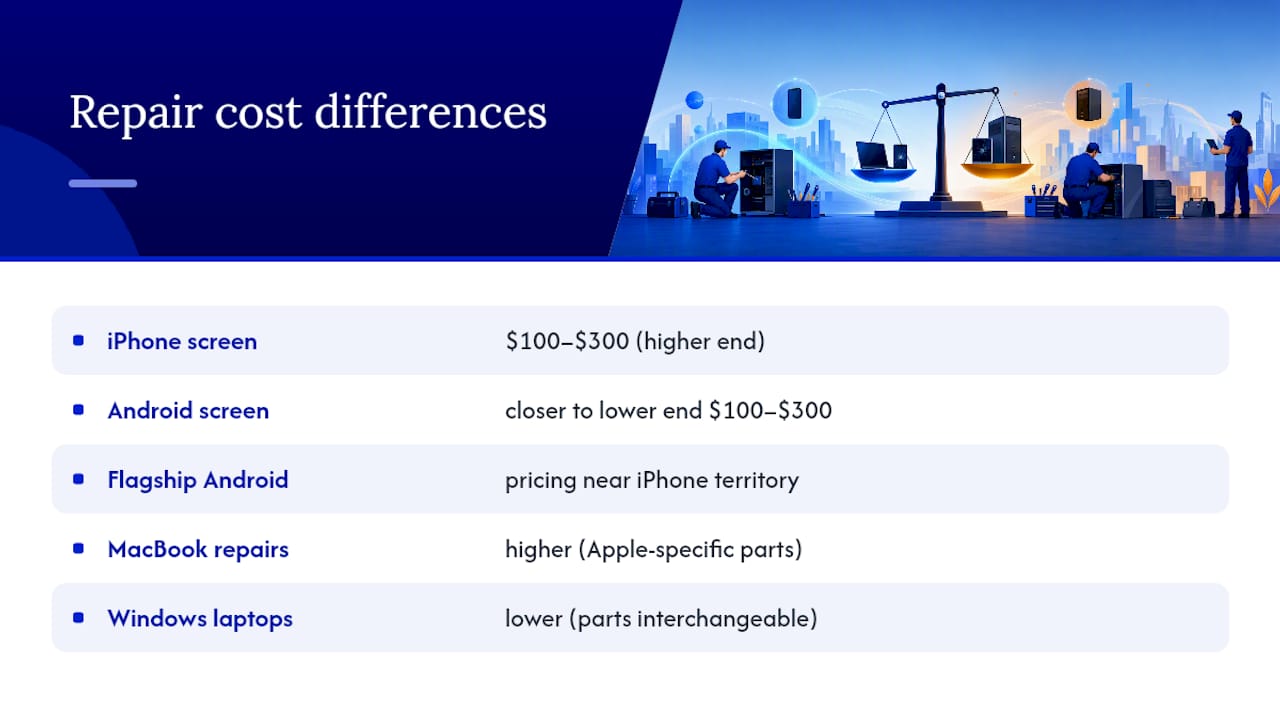
It does, and the gap is bigger than most people expect. Apple devices tend to carry higher repair costs across the board, partly because parts are tightly controlled and partly because demand for iPhone and MacBook repairs keeps technician rates firm. A cracked iPhone screen often lands at the higher end of the $100 to $300 range, while a comparable Android screen repair can come in closer to the lower end, simply because aftermarket Android parts are more widely available and less expensive to source.
Samsung and Google Pixel devices generally split the difference. Flagship models like the Galaxy S series or Pixel Pro line price closer to iPhone territory, while budget Android phones can be repaired for noticeably less. Laptops show a similar pattern. Windows machines from mainstream manufacturers usually have more parts interchangeability, which keeps costs down, while MacBooks require Apple-specific components that are pricier and sometimes slower to source for on-site MacBook repair.
None of this means one platform is a better buy. It means budgeting for repairs should factor in which ecosystem you’re in, not just which repair you need.
The Real Cost Question Isn’t the Number, It’s the Certainty
Most advice on this topic obsesses over getting the lowest possible number, and that’s the wrong priority for a business owner. A $150 repair with a vague parts warranty and no data-safety plan is a worse deal than a $180 repair with both, because the hidden cost of a second failure or a data leak dwarfs the $30 difference.
What the research actually supports is this: businesses should prioritize transparency and speed over shaving the last few dollars off a quote. A technician who states the diagnostic fee upfront, applies it to the repair, and backs the work with a warranty on parts and labor is protecting you from the expensive surprises, not just the cheap ones. Downtime on a point-of-sale device or a work laptop costs more per hour than most people calculate, which is exactly why minimizing repair disruption matters as much as the sticker price.
The reader’s real job isn’t finding the cheapest quote. It’s finding the technician who won’t need to see the device twice.
— Michael
Book Same-Day On-Site Repair With Repair Genius
Certified technicians provide same-day visits at your home or office, with a written quote before any work starts and no hidden fees tacked on afterward.

Here’s what happens once you reach out: the technician runs a diagnostic, that fee is often applied to your repair if you approve the work, and jobs often come with a warranty on parts and labor. Data safety is handled carefully, which matters if your phone or laptop holds business files you can’t afford to lose. Whether it’s a cracked screen, a laptop that won’t boot, or a full office visit for multiple business laptop repairs, you get one technician, one clear price, and no trip to a shop. Ready to get a quote for your device? Book your on-site repair with Repair Genius today.
Sources
- What Is the Average Cost of Phone Screen Repair in 2026?
- Repair or replace phone — T-Mobile Dialed In
- Computer repair prices — Thumbtack
- Repair vs replace: phone fix costs (2026)
Recommended
- Types of Business Laptop Repairs: 2026 Guide
- Why Employee Devices Need Quick Repair: 2026 Guide
- Device Repair Cost Saving Benefits: Your 2026 Guide
- On-Site Repair for Office Electronics: 2026 Guide