
Emergency device repair is defined as immediate, unplanned repair work performed to restore a failed electronic device to working condition and prevent escalating damage or operational risk. Unlike a scheduled tune-up, this type of repair cannot wait. Your smartphone, laptop, or tablet has stopped working, and every hour of delay increases the chance of permanent loss. SafetyCulture defines emergency maintenance as a subset of breakdown maintenance requiring immediate action to secure assets and resume operations. That definition applies directly to the phones, laptops, and circuit boards people depend on daily. Companies like Fixtronics, MT Unirepair, and Powergenics have built entire service tiers around this urgency.
What is emergency device repair and how does it work?
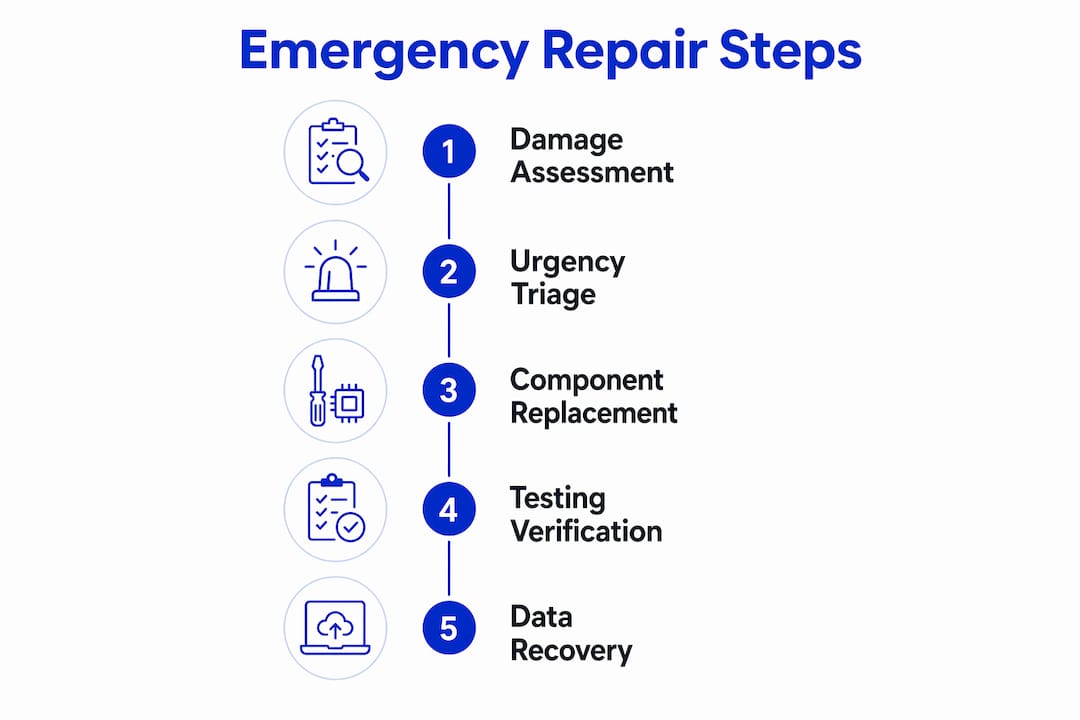
Emergency device repair is the process of diagnosing and fixing a malfunctioning electronic device as fast as possible, with the goal of minimizing downtime and preventing further damage. The workflow moves faster than standard repair, but it follows a clear sequence.
1. Initial damage assessment. A technician evaluates the device to identify what failed and how severe the damage is. For water-damaged phones, this means checking for corrosion, short circuits, and component failure before anything else.
2. Urgency triage. Not every broken device qualifies as a true emergency. Technicians assess whether the failure creates a safety risk, a compliance issue, or a critical operational gap. A cracked screen on a backup phone is not the same as a water-damaged device that holds irreplaceable business data.
3. Targeted repair or component replacement. Once the damage is mapped, the technician replaces failed components, cleans corroded boards, or restores software. For water damage specifically, professional cleaning with isopropyl alcohol is standard. Mineral residues corrode internal components over days and weeks, even when the device appears to function normally at first.
4. Testing and verification. The repaired device goes through functional testing before it is returned. This step confirms the repair held and catches secondary failures that the initial assessment may have missed.
5. Data recovery, when needed. Some shops recover data by accessing NAND flash memory directly, bypassing a damaged board entirely. This matters most for phones that will not power on after water exposure.
Expedited repair services cut turnaround times from the standard 2–6 weeks down to 1–2 days for most consumer devices. For industrial circuit boards, Powergenics offers a dedicated expedited tier that completes repairs in 7–10 business days versus the standard 2–3 week window.
Pro Tip: If your device suffered water damage, do not attempt to test whether it still works by powering it on. That single action is the most common cause of irreversible short circuit damage.
How does emergency repair differ from standard repair?
The core difference between emergency and standard repair is not just speed. It is the cost structure, the service priority, and the risk calculus behind the decision.
| Factor | Emergency repair | Standard repair |
|---|---|---|
| Turnaround time | Same day to 48 hours | 2–6 weeks |
| Cost | Higher, with rush surcharges | Base rate only |
| Availability | On-demand, often same day | Scheduled appointment |
| Warranty | Varies by shop, typically 30–90 days | Same range |
| Best for | Active water damage, critical data at risk, business devices | Non-urgent screen cracks, battery swaps |
Expedited same-day or next-day service often adds $95 or more on top of standard repair prices. That surcharge reflects the cost of reprioritizing the technician’s queue and sourcing parts faster. For a device that holds your business contacts, client files, or irreplaceable photos, that fee is almost always worth paying.
Standard repair makes sense when the device is not your primary tool and the damage is cosmetic or slow-moving. Emergency repair is the right call when:
- The device holds data you cannot access any other way
- The failure is actively worsening, as with water damage and corrosion
- The device is critical to your work or daily safety
- You cannot afford to wait days for a scheduled appointment
The warranty period at quality shops typically runs 30–90 days regardless of repair type. Always confirm this before you hand over your device.
What should you do immediately after a device emergency?
The first 30 minutes after a device emergency determine whether the repair succeeds or fails. Most people make the situation worse by acting on instinct rather than protocol.
Power off immediately. Charging a wet device causes short circuits and permanent failure. Turn the device off the moment it contacts water, and do not turn it back on to check if it still works.
Remove the case and SIM tray. Both trap moisture against the device body. Removing them gives the internal components more airflow and slows corrosion.
Skip the rice trick. Rice does not absorb moisture from inside a phone’s sealed components. It is a myth that delays proper professional cleaning. The same applies to blowing air into ports, which pushes water deeper into the device.
Get to a professional within hours, not days. Corrosion spreads continuously after water exposure, even when the device appears fine. A phone that powers on after a drop in water may fail completely within 48–72 hours as mineral deposits corrode the board.
Here is a quick checklist for the first 30 minutes:
- Power off the device immediately
- Remove the case, SIM tray, and any memory cards
- Pat the exterior dry with a soft cloth
- Do not use heat sources like hair dryers
- Do not charge or plug in the device
- Contact a repair professional right away
For iPhones specifically, water damaged iPhone repair requires prompt professional cleaning because Apple’s sealed design traps moisture longer than older open-frame phones.
Pro Tip: Take a photo of your device’s condition before handing it to any repair shop. This protects you if there is any dispute about pre-existing damage.
How do you choose the right emergency repair service?
Choosing the right provider under pressure is where most people make costly mistakes. Speed feels like the only priority, but a fast repair that fails in two weeks costs more than a slightly slower repair done correctly.
MT Unirepair advises customers to ask four specific questions before committing to any repair shop: What is the diagnostic fee? What is the realistic repair timeline? Do you offer expedited service? What warranty do you provide?
Ask these questions before you drop off your device:
- Diagnostic fee: Some shops charge $0 for diagnostics, others charge $25–$75. Know this upfront.
- Repair timeline: Get a specific estimate, not a vague “a few days.” Same-day and next-day options exist at quality shops.
- Expedited availability: Not every shop offers true emergency repair services. Confirm they can actually prioritize your device.
- Warranty coverage: A shop that offers no warranty on emergency repairs is a red flag.
- Data protection protocol: Ask directly how they handle your personal data during the repair process. Reputable shops have a clear answer.
Certifications and verified reviews matter more than price. A shop with hundreds of positive reviews and transparent pricing is a safer choice than the cheapest option with no track record. For expediting your laptop repair, clear communication about your timeline and the device’s role in your work helps technicians prioritize correctly.
Data safety is a non-negotiable factor. Effective emergency repair includes contingency planning for data recovery, especially when devices do not power on. Ask whether the shop can recover data at the chip level if standard methods fail.
Key Takeaways
Emergency device repair is urgent, unplanned repair work that must begin within hours to prevent permanent damage, data loss, and escalating costs.
| Point | Details |
|---|---|
| Power off immediately | Turning off a water-exposed device prevents short circuits and is the single most critical first step. |
| Emergency vs standard cost | Expedited same-day service adds $95 or more in rush fees on top of standard repair pricing. |
| Turnaround time difference | Emergency repair completes in 1–2 days; standard repair typically takes 2–6 weeks. |
| Ask four key questions | Before any repair, confirm diagnostic fees, timeline, expedited options, and warranty coverage. |
| Data recovery is possible | Chip-level NAND flash recovery can retrieve data from devices that will not power on at all. |
What I have learned from watching people handle device emergencies
The most expensive mistake I see is hesitation. Someone drops their phone in water, it seems to work fine, and they decide to “wait and see.” Three days later, the corrosion has spread across the board and what would have been a $150 cleaning job becomes a $400 board replacement or a total loss.
The second most expensive mistake is trusting the rice trick. It is everywhere online, it feels logical, and it does almost nothing useful. Rice cannot reach the moisture trapped inside a sealed modern smartphone. Every hour spent with a phone in a bag of rice is an hour of corrosion spreading unchecked.
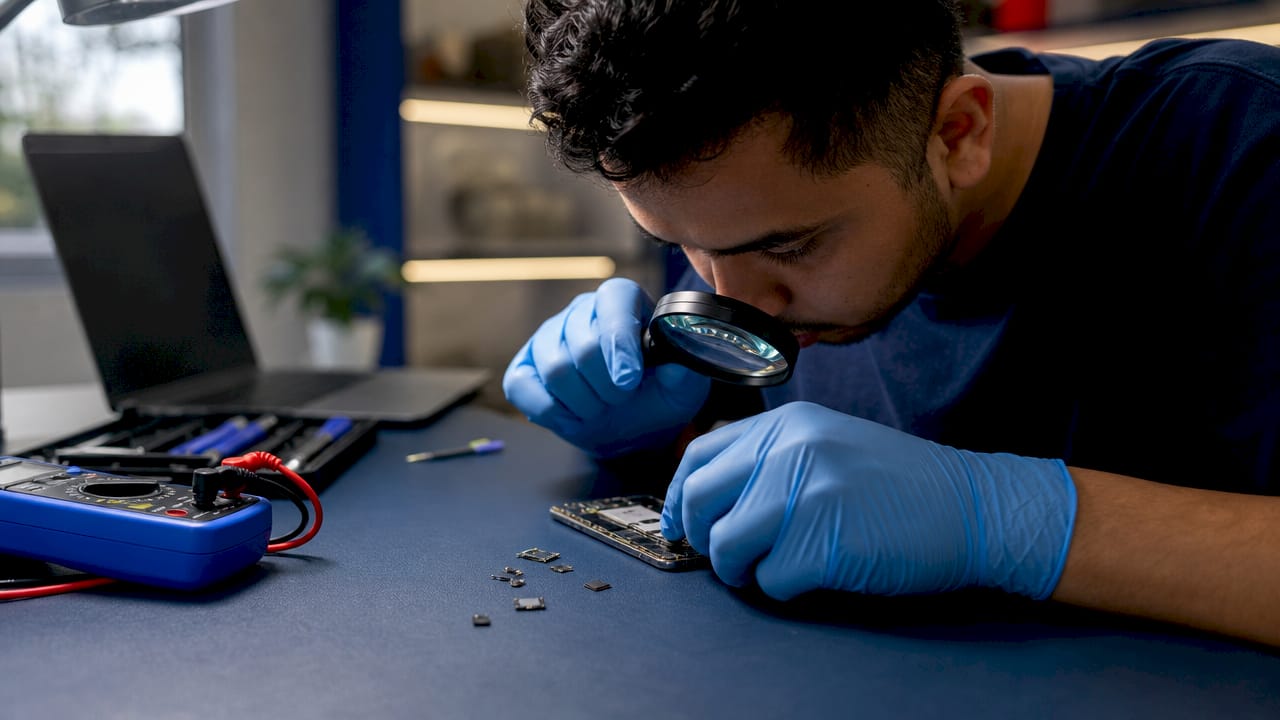
What actually works is speed and professional cleaning. The shops that do this well, including Repair Genius here in Orlando, use isopropyl alcohol cleaning under magnification to remove mineral deposits before they bond to the board. That process requires tools and training that no home remedy can replicate.
The other thing I would push back on is the assumption that emergency repair is always expensive. Yes, rush fees exist. But compare a $95 expedited fee to the cost of replacing an iPhone 15 or a business laptop. Repair almost always wins on cost, and it wins by a wide margin when you act fast enough to save the device.
My practical advice: treat any water exposure, sudden power failure, or cracked screen on a critical device as an emergency until proven otherwise. The cost of acting fast is almost always lower than the cost of waiting.
— Michael
Repair Genius brings emergency electronics repair to you
When your phone, laptop, or tablet fails and you cannot afford to wait, Repair Genius provides on-site emergency repair services across Orlando and Winter Park, Florida. Technicians come directly to your location, which means no drop-off lines and no waiting days for a shop appointment.

Repair Genius offers same-day electronics repair for iPhones, Android phones, laptops, and tablets, with transparent pricing and no hidden fees. Every repair comes backed by over 10 years of experience and a clear warranty. Data safety is treated as a priority throughout the process, not an afterthought. If your device needs urgent attention, on-site repair in Orlando is available now. Contact Repair Genius directly to get a technician to your location fast.
FAQ
What is emergency device repair?
Emergency device repair is immediate, unplanned repair work performed to restore a failed electronic device to working condition and prevent further damage or data loss. It differs from standard repair by its urgency, faster turnaround, and higher priority in the repair queue.
How fast is an emergency repair turnaround?
Expedited repair services typically complete repairs in 1–2 days, compared to 2–6 weeks for standard service. Same-day options are available at select shops for common repairs like screen replacements and water damage cleaning.
Does emergency repair cost more than standard repair?
Yes. Expedited same-day or next-day service typically adds $95 or more in rush fees on top of the base repair price. The surcharge reflects faster parts sourcing and reprioritization of the technician’s schedule.
What should I do first if my phone gets wet?
Power off the device immediately and do not attempt to charge it. Powering on a wet device causes short circuits that lead to permanent failure. Contact a repair professional within hours, not days.
Can data be recovered from a device that will not turn on?
Yes. Skilled technicians can recover data by accessing NAND flash memory directly, bypassing a damaged board entirely. This chip-level recovery method works even when the device shows no signs of life after water damage or a hard failure.
Recommended
- Why Employee Devices Need Quick Repair: 2026 Guide
- Minimize Device Repair Disruption: A Pro’s Guide
- Same-Day Electronics Repair in Winter Park
- Same-Day Electronics Repair in Winter Park