The cracked screen repair process is the professional method of diagnosing, removing, and replacing a broken smartphone or tablet display to restore full device function and structural integrity. For Apple iPhone and Samsung Galaxy owners, this is a precise, multi-step procedure that covers diagnostic testing, adhesive removal, screen replacement, and calibration checks. A skilled technician completes most repairs in 30–90 minutes, and reputable shops back their work with warranties ranging from 90 days to 12 months. Knowing what each stage involves puts you in a far stronger position to choose the right repair option and avoid costly mistakes.
What are the types of cracked screen repairs?
The two main categories in smartphone screen repair are glass-only repair and full screen assembly replacement. Understanding the difference saves you money and prevents you from paying for more than you need.
Glass-only repair applies when the outer glass is cracked but the display underneath still works perfectly. No dead pixels, no black blotches, no touch failure. Glass-only repair is increasingly rare on modern phones because manufacturers like Apple and Samsung bond the glass directly to the OLED or LCD layer. Separating them without industrial laminating equipment almost always damages the digitizer. Most DIYers cannot replicate this process reliably.
Full screen assembly replacement is the standard fix when you see any of these symptoms:
- Black spots or blotches spreading from the crack
- Flickering or lines running across the display
- Touch response failing in certain areas
- A completely dark screen despite the phone powering on
- Visible damage to the display layer beneath the glass
The cost difference between the two options is significant. A repair cost breakdown shows that full assembly replacements for flagship devices can run $149–$379 out of warranty, while glass-only repairs at shops equipped for it cost considerably less. The catch is that very few shops outside of specialized labs can do glass-only work safely on bonded screens.
| Repair Type | Best For | Typical Cost Range |
|---|---|---|
| Glass-only repair | Surface crack, display fully functional | Lower cost, limited availability |
| Full assembly replacement | Dead pixels, touch failure, blackout | $149–$379 (out of warranty) |
| DIY kit repair | Budget-conscious, minor damage | $79–$110 |
How does the professional screen repair process work?
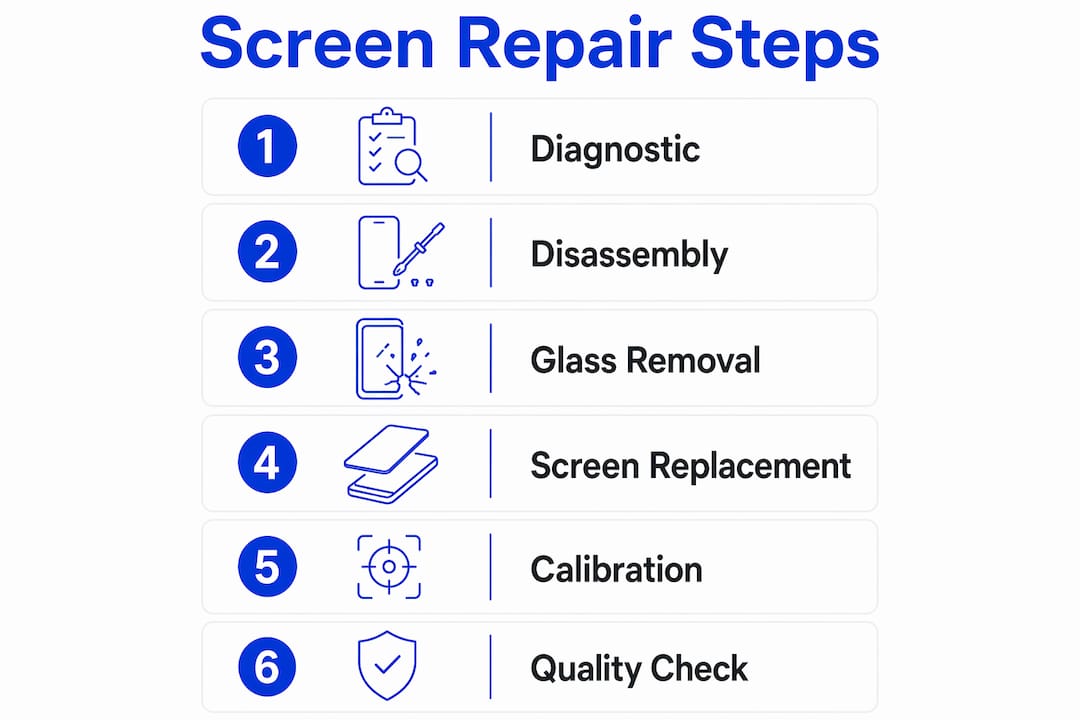
A professional shop follows a defined sequence every time. Here is exactly what happens from the moment you hand over your device.
- Diagnostic assessment (5 minutes). The technician tests touch response, display quality, camera function, and Face ID before touching a single screw. This baseline check confirms what is broken and what is not, so no pre-existing issue gets blamed on the repair later.
- Heating the adhesive. A heat gun or heating pad warms the edges of the screen to soften the adhesive bond. This step is critical. Skipping it or rushing it causes the glass to shatter further during removal.
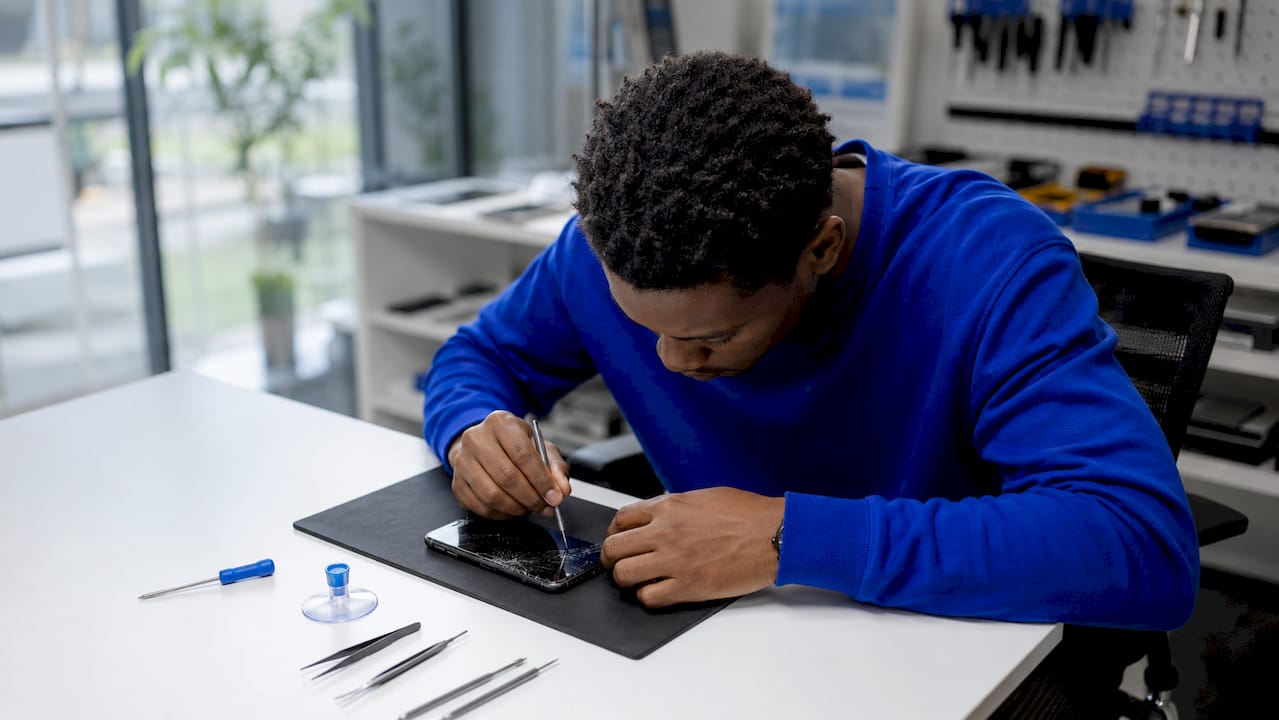
- Opening the device with mechanical tools. Specialized screen openers and suction cups minimize damage risk while prying the display free. Plastic picks trace the edges to avoid cutting ribbon cables hidden just inside the frame.
- Disconnecting cables and preserving components. On iPhones, the Face ID sensor and front camera module are embedded in the screen assembly and must transfer to the new screen intact. Damaging Face ID during this step is usually irreparable without logic board service.
- Cleaning adhesive residue. Old adhesive gets removed from the frame before the new screen goes in. Skipping this step causes poor screen fitment and compromises the device’s water resistance rating.
- Installing the new screen. Fresh adhesive secures the replacement display. The technician reconnects all cables and seats the screen evenly in the frame before pressing it closed.
- Calibration checks. On iPhones, True Tone calibration restores accurate color reproduction after a screen swap. Shops that skip this step leave you with a display that looks noticeably off compared to the original.
- Final functional testing. A quality shop verifies full touch responsiveness, checks for dead pixels, confirms Face ID and front camera operation, and inspects color accuracy before handing the device back.
Pro Tip: Ask the shop to run the diagnostic in front of you before the repair starts. This protects you if any pre-existing issue surfaces after the repair is complete.
How much does cracked screen repair cost?
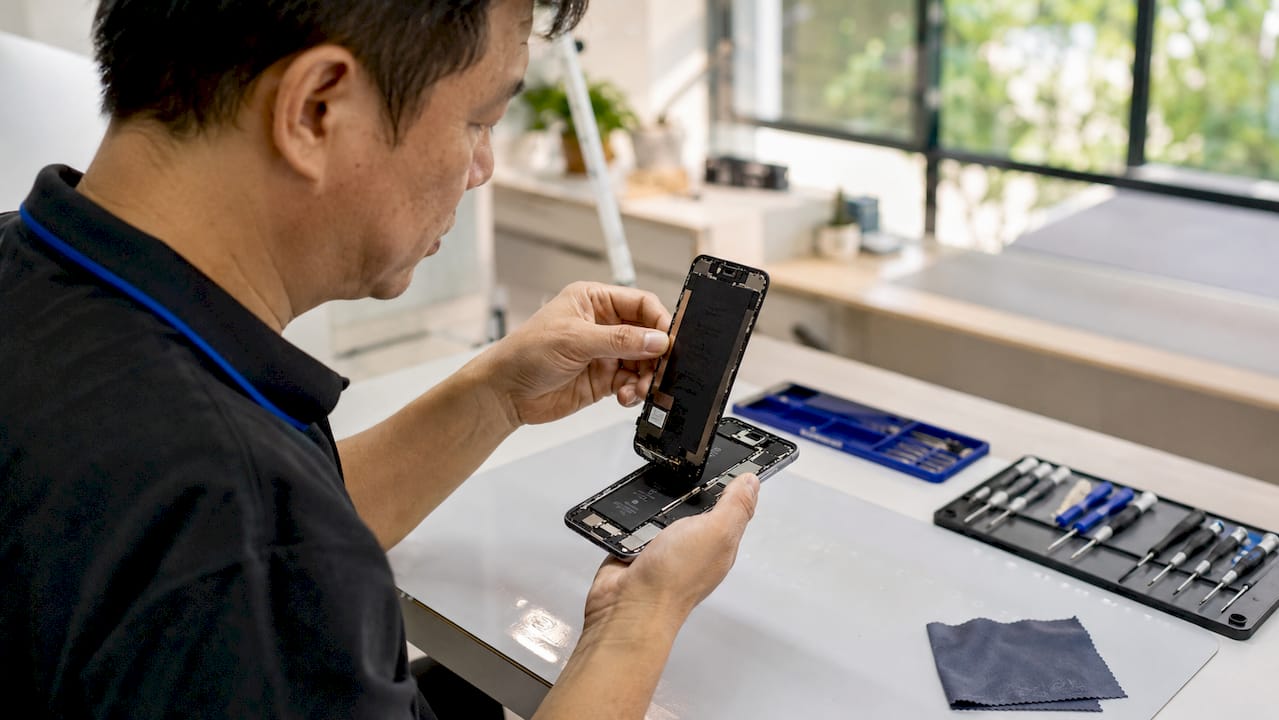
Repair costs vary widely depending on your device, your insurance status, and where you go. Here is a realistic breakdown.
Out-of-warranty repairs through Apple or Samsung run $149–$379 depending on the model. Insurance through AppleCare+ or a carrier plan drops that to around $29 per incident. Independent shops typically charge 40–60% less than manufacturer-authorized centers, making them the most popular choice for budget-conscious repairs. DIY kits land in the $79–$110 range, but they carry real risks.
The DIY tradeoff is rarely worth it for flagship phones. A kit gives you a replacement panel and basic tools, but it does not give you a heating station, industrial laminating equipment, or calibration software. One slipped pick can sever a ribbon cable and turn a $200 repair into a $600 logic board job.
| Repair Option | Estimated Cost | Warranty Included |
|---|---|---|
| Manufacturer authorized (Apple, Samsung) | $149–$379 | Yes, typically 90 days |
| Independent repair shop | 40–60% less than authorized | 6–12 months at reputable shops |
| DIY kit | $79–$110 | None |
| Insurance claim (AppleCare+) | ~$29 per incident | Covered under plan |
If you are working with a tight budget, explore budget-friendly repair options before defaulting to a DIY kit. Independent shops with OEM-equivalent parts often deliver results close to manufacturer quality at a fraction of the price.
Pro Tip: Always ask whether the shop uses OEM or aftermarket parts before committing. Third-party aftermarket panels often reduce display brightness and color accuracy compared to original components.
What mistakes should you avoid during screen repair?
The most expensive mistakes in mobile screen restoration happen before a technician ever touches the phone. Here is what to watch out for.
Avoid home remedies entirely. Windshield repair kits and clear tape do not restore glass strength or water resistance. They mask the crack visually while leaving the structural damage intact. Worse, adhesive residue from tape can complicate the professional repair that follows, adding time and cost.
Do not skip calibration. Face ID and True Tone sensors embedded in the screen assembly require recalibration after replacement. A shop that skips this step delivers a phone that looks and behaves differently from the original. Always ask whether calibration is included in the quoted price.
Check the warranty policy before you pay. Reputable independent shops offer written warranties of 6–12 months. A shop that cannot produce a written warranty is a shop that does not stand behind its work. Walk away.
Verify parts quality upfront. Aftermarket panels vary enormously in quality. OEM or OEM-equivalent parts maintain the original color profile, brightness, and touch sensitivity. Cheap substitutes often feel different under your finger and wash out in sunlight.
Treating screen repair as routine maintenance, and choosing shops with transparent warranty policies, directly improves device longevity. The repair is only as good as the parts and the technician behind it.
Do not rush the decision. A cracked screen is stressful, but choosing the first shop you find online without checking reviews or warranty terms is how people end up with a phone that looks repaired but performs worse than before.
Key takeaways
The cracked screen repair process requires professional diagnosis, proper tools, OEM-quality parts, and post-repair calibration to deliver a lasting, reliable result.
| Point | Details |
|---|---|
| Know your repair type | Glass-only repair suits surface cracks; full assembly replacement handles dead pixels, blackouts, or touch failure. |
| Professional process has 8 steps | From diagnostic to final testing, each stage protects components like Face ID and True Tone. |
| Cost varies by repair path | Independent shops save 40–60% over authorized centers; insurance cuts costs to around $29 per incident. |
| Calibration is non-negotiable | Skipping True Tone and touch calibration leaves your display looking and feeling off after repair. |
| Warranty signals quality | Reputable shops provide written warranties of 6–12 months; no warranty means no accountability. |
Why knowing the process changes everything
I have talked to hundreds of people who handed their phone to a repair shop without asking a single question. Most of them had no idea what they were paying for. Some got their phones back with screens that looked slightly yellow or had touch sensitivity that felt sluggish in the corners. They assumed that was just how it was after a repair. It is not.
The single biggest misconception I see is that screen repair is a simple swap. You pull the old one off, stick the new one on, done. That thinking is exactly why so many people end up with a phone that works but does not feel right. The calibration steps, the adhesive cleaning, the component transfers — those are not optional extras. They are what separates a quality repair from one that degrades your experience over the next six months.
My honest advice: treat the warranty conversation as a filter. If a shop hesitates when you ask about their written warranty or gets vague about whether they use OEM parts, that tells you everything. The shops that do this right are proud to answer those questions. For cracked iPhone screen repair specifically, I always recommend confirming that True Tone and Face ID will be preserved and tested before you agree to anything.
For on-site repair options in the Orlando area, the convenience factor matters too. A shop that comes to you eliminates the risk of further damage during transport and gets your device back in your hands faster.
— Michael
Get your screen fixed right the first time with repair genius
If you want the cracked screen repair process done correctly without the guesswork, Repair Genius brings expert technicians directly to you in Orlando and Winter Park, Florida. No drop-off lines, no waiting days for a callback.

Repair Genius uses OEM-quality parts, performs full calibration on every repair, and backs all work with transparent pricing and no hidden fees. Whether you need iPhone repair in Orlando or a same-day fix for your Android or tablet, the team has over 10 years of experience handling repairs that other shops turn away. Visit Repair Genius to book your on-site repair today and get your device back to full function without the hassle.
FAQ
How long does a cracked screen repair take?
Most professional screen repairs take 30–90 minutes from diagnostic to handover. Complex repairs involving component transfers like Face ID may take closer to the 90-minute mark.
Can i fix a cracked screen myself with a DIY kit?
DIY kits cost $79–$110 but carry significant risk on modern bonded screens. Without heating equipment, industrial laminating tools, and calibration software, you risk damaging Face ID sensors and ribbon cables that are expensive to replace.
Does cracked screen repair affect my phone’s warranty?
Repairs through unauthorized shops can void the manufacturer warranty on some devices. Using an authorized service center or a shop that uses OEM parts and provides a written warranty protects your investment and maintains coverage where possible.
What is true tone calibration and why does it matter after repair?
True Tone calibration adjusts your iPhone display to match ambient lighting for accurate color reproduction. Shops that skip this step after a screen replacement leave the display looking noticeably warmer or cooler than the original setting.
Are home remedies like tape or windshield kits worth trying?
No. Home remedies do not restore glass strength or water resistance and can leave adhesive residue that complicates professional repair later. They mask the problem without solving it.
Recommended
- Cracked iPhone Screen Repair Near Me
- Fix Cracked iPhone Screen Near Me
- iPhone Screen Repair Cost and Same Day Repair in Orlando
- iPhone Screen Repair Process Explained for 2026