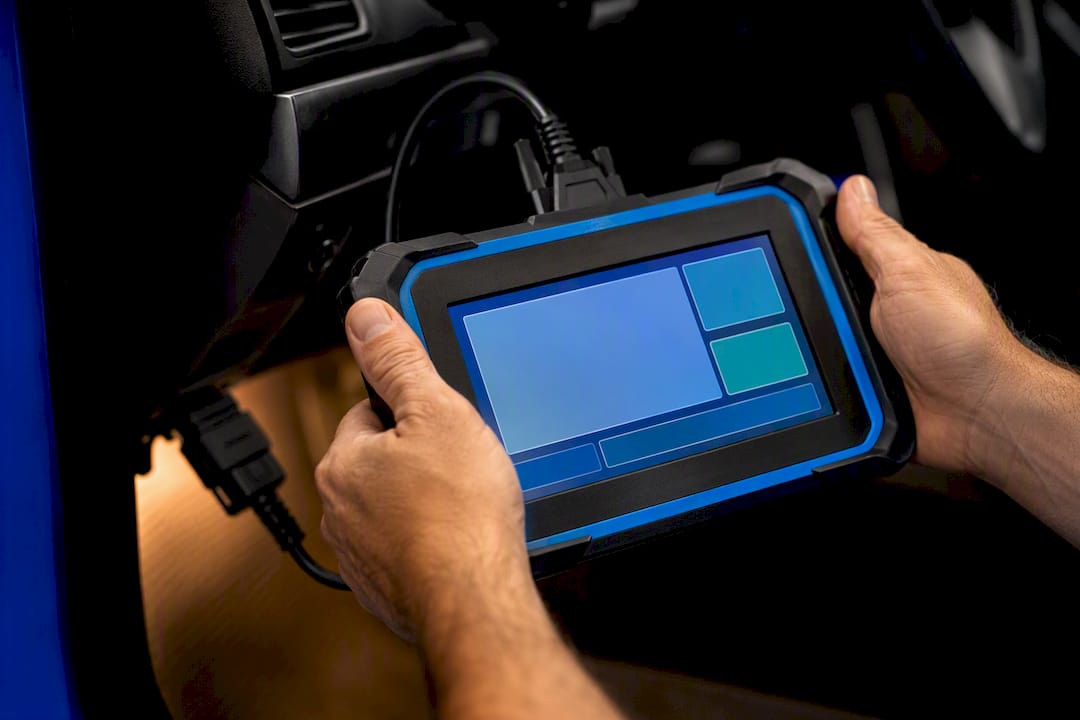
A diagnostic fee pays for a technician’s time, specialized scan tools, and hands-on testing to figure out what’s actually wrong with your car. Expect to pay one for anything beyond a quick warning light, usually somewhere between $40 and $500 depending on the shop. Before you agree to it, ask exactly what tests will be run and whether the charge gets credited toward the repair if you move forward.
TL;DR:
- Diagnostic fees typically range from $40 to $500, depending on the complexity of the problem and whether it is a dealership or independent shop.
- A proper diagnostic involves symptom confirmation, code scanning, live data checks, road testing, and wiring tests, not just a quick code read.
- Shops may credit or waive diagnostic fees if repairs are authorized, but policies vary, so written estimates are crucial before proceeding.
- Always request detailed, written reports and scan images to ensure transparency and proof of the diagnostic process, especially if second opinions are needed.
- Fair diagnostic pricing is supported by clear, itemized estimates and documentation, protecting consumers from vague or deceptive billing practices.
Table of Contents
- What Is a Diagnostic Fee, and Why Do Shops Charge It?
- What Should You Get for Your Diagnostic Fee?
- How Much Does a Diagnostic Fee Usually Cost?
- When Is a Diagnostic Fee Credited or Waived?
- How Do You Know If a Diagnostic Fee Is Fair?
- What If You Want a Second Opinion?
- Do State Rules Protect You from Unfair Diagnostic Fees?
- How Repair Genius Handles Diagnostics and Pricing
- Why the Fee Itself Isn’t the Real Question
- Ready to Book a Transparent Diagnostic?
- Sources
What Is a Diagnostic Fee, and Why Do Shops Charge It?
A diagnostic fee explained simply: it’s the price of a mechanic’s time spent finding the actual cause of a problem, not fixing it. That distinction trips up a lot of car owners who assume plugging in a scanner should be free, the way it sometimes is at an auto parts store.
Real diagnostic work goes far past a basic code read. A trained technician has to interpret what that code actually means for your specific engine, pull live sensor data, and often run a road test to reproduce the symptom before touching a wrench.
Several costs sit behind that fee:
- Technician wages for skilled, specialized labor, not entry-level work
- Scan tools and software subscriptions that run into thousands of dollars per shop
- Ongoing training to keep up with new vehicle systems
- Shop overhead: bay space, insurance, equipment maintenance
A basic code pull might take ten minutes. A full diagnostic trace on an intermittent electrical fault can eat up an entire afternoon, and the fee should reflect that gap.
What Should You Get for Your Diagnostic Fee?
A proper diagnostic visit isn’t just a technician glancing at a screen and shrugging. It follows a sequence, and you should be able to see evidence of each step.
- Symptom confirmation. The technician asks when the problem happens and tries to reproduce it.
- Code scan. A scan tool pulls stored trouble codes from the vehicle’s computer.
- Live-data checks. Sensors get monitored in real time to catch what a static code can’t show.
- Road test. Many issues only show up under load or at speed.
- Wiring and component tests. Connectors, grounds, and individual parts get checked when codes point to electrical faults.
What comes out the other end matters just as much as the process. A fair shop hands you a written report noting symptoms, tests run, and a suspected root cause, along with scan screenshots or a printout and a repair estimate.
Pro Tip: Take a photo of the scan tool screen with your phone if the shop doesn’t print one for you. It costs nothing and gives you a record if you decide to get a second opinion.
Documentation isn’t a courtesy add-on. It’s what keeps you from paying for the same diagnosis twice.
How Much Does a Diagnostic Fee Usually Cost?
Prices swing widely depending on who’s doing the work and how complicated the problem is. Independent shops typically charge $40 to $160 for a basic diagnostic, while dealerships often land between $100 and $500 or more, since dealership fees cover technician labor on your specific make and model and dealer overhead runs higher.
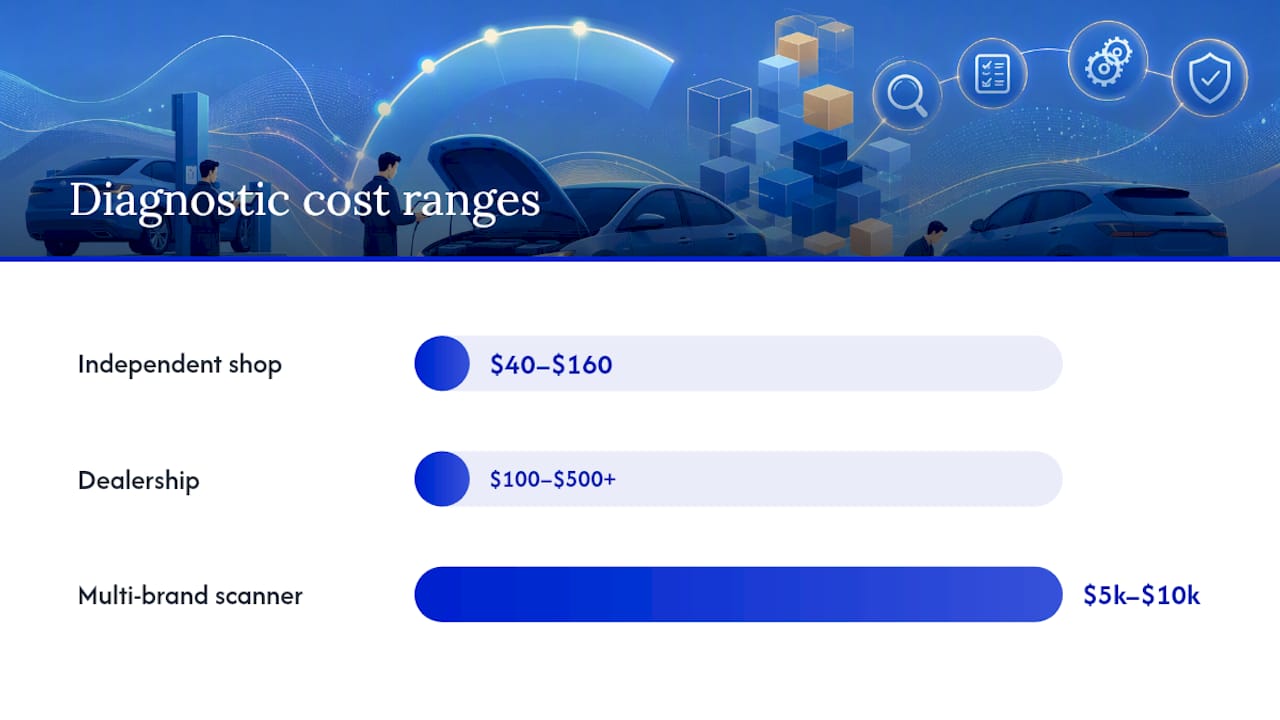
That tiered structure comes from how mechanics actually price diagnostic work, and it’s a useful way to sanity-check a quote against the problem you described.
A comprehensive multi-brand scanner alone can run $5,000 to $10,000, which is one reason a “free diagnostic” offer deserves a second look. If a shop waives the fee entirely, ask whether that’s a full Level 2 or 3 diagnostic or just a code read that skips the harder work.
When Is a Diagnostic Fee Credited or Waived?
Billing policy varies more than most car owners expect, and the wording matters. Three models show up repeatedly across shops:
- Charge-and-credit: you pay the diagnostic fee up front, and it gets applied toward the repair bill if you approve the work.
- Waived: the fee disappears entirely once you commit to the repair, common when a shop is confident about winning the job.
- Nonrefundable: you pay regardless of whether you proceed, typical for complex or uncertain cases like intermittent electrical faults.
Ask the shop to put its policy directly on the written estimate, not just tell you verbally. Phone and electronics repair shops follow a similar pattern: known, flat-rate jobs like a screen swap rarely carry a diagnostic fee, while uncertain cases such as water damage often use a bench fee that’s waived only if repair goes forward. If a shop doesn’t write its policy down, that’s worth pausing over before you sign anything.
How Do You Know If a Diagnostic Fee Is Fair?
Run through this before you authorize anything:
- Ask what specific tests will be performed, not just “we’ll check it out.”
- Confirm whether the fee applies toward the repair cost if you proceed.
- Ask how long the diagnostic is expected to take.
- Request a written report and scan data as part of the deliverable.
- Ask if there’s any warranty on the diagnostic itself if the first fix doesn’t solve it.
The exact phrasing matters. Try: “What tests exactly will you run, and how long should it take?” and “Is this fee credited toward the repair if I approve the work?” Vague answers to either question are a signal to slow down.
Pro Tip: If a shop pressures you to authorize repairs before you’ve seen any test results or a written estimate, treat that as a red flag, not urgency. A legitimate diagnosis produces evidence before it produces a sales pitch.
Other warning signs include a shop that refuses to itemize the diagnostic fee separately on the invoice, or one that can’t explain why a $400 diagnostic took fifteen minutes.
What If You Want a Second Opinion?
Bring the written diagnostic report and any scan printouts with you. A second shop can often quote the repair off that documentation without re-running the whole diagnostic, which saves you a second fee entirely.
A second opinion is worth the extra step when:
- The repair estimate is expensive relative to the vehicle’s value
- The problem is intermittent and the first diagnosis feels like guesswork
- You’ve had the same issue “fixed” before and it came back
If a shop’s explanation still doesn’t add up, ask for a re-test, take your documented findings elsewhere, or contact your state’s consumer protection office if you suspect deceptive billing.
Do State Rules Protect You from Unfair Diagnostic Fees?
Consumer protections around diagnostic billing vary by state, so treat these as illustrative rather than a substitute for checking your own state’s rules. Some states set clear thresholds: Connecticut requires written consent for diagnoses over a certain dollar amount, and Washington requires a written estimate for face-to-face repairs expected to exceed roughly $100. California’s Bureau of Automotive Repair enforces its own disclosure rules for licensed shops.
At the federal level, the FTC prohibits unfair or deceptive business practices, which covers vague or bait-and-switch diagnostic pricing.
Two habits protect you regardless of which state you’re in:
- Always request a written estimate and authorization before work begins
- Keep every document: the estimate, the diagnostic report, and the final invoice
How Repair Genius Handles Diagnostics and Pricing
Repair Genius runs on-site diagnostics for phones, laptops, tablets, and computers using the same kind of diagnostic software that identifies the real fault before any repair starts. Every customer gets transparent pricing with no hidden fees and written findings before authorizing work. You get a next-step quote on the spot, plus a warranty on both parts and labor once repairs are approved.
Why the Fee Itself Isn’t the Real Question
Most of the anger around diagnostic fees isn’t really about the dollar amount. It’s about paying for something invisible. A car owner hands over $120 and gets a verbal “it’s your sensor” with nothing to show for it, and that feels like a bad deal even when the price was fair.
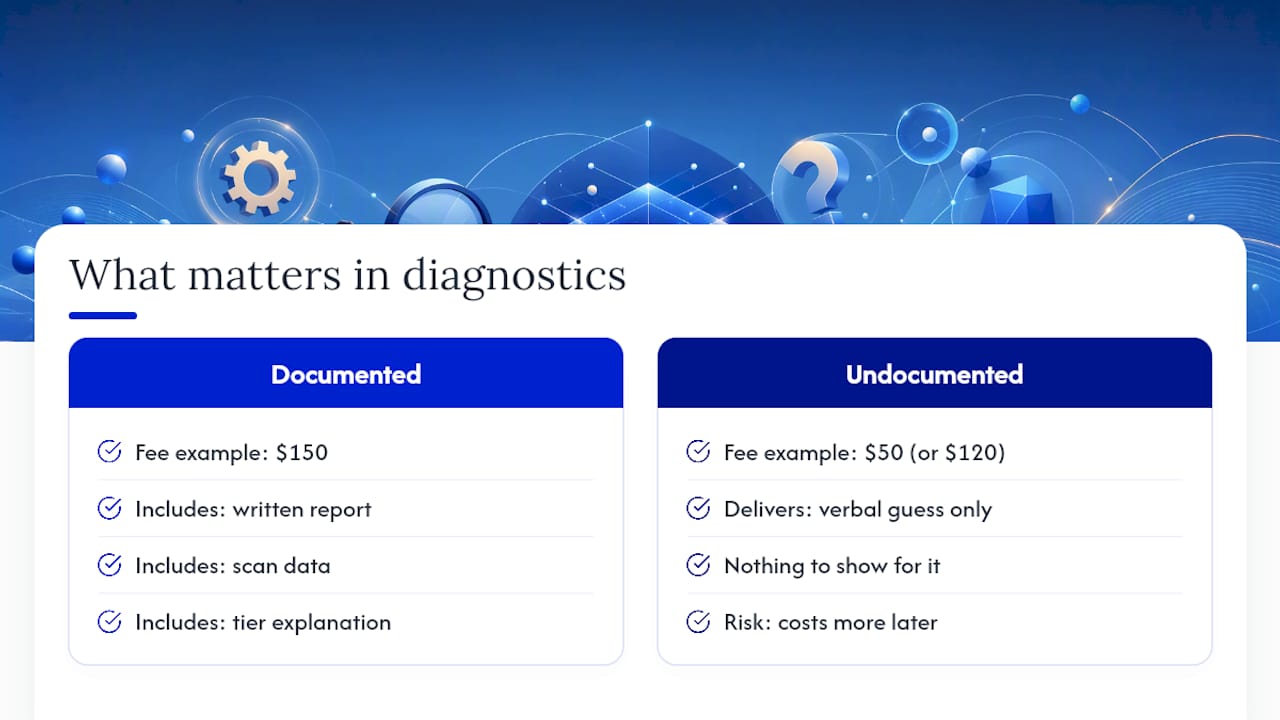
The conventional advice out there focuses almost entirely on finding the cheapest diagnostic fee, and that’s the wrong priority. A $150 diagnosis that comes with a written report, scan data, and a clear tier explanation beats a $50 diagnosis that’s really just a guess dressed up as an answer. Cheap and undocumented costs you more later, usually in the form of a second diagnostic fee somewhere else.
If there’s one habit worth building, it’s this: treat the written report as the actual product you’re buying, not the fee itself. The fee is just the price tag. The documentation is what proves you got something real for your money, and it’s the only thing that protects you if the first repair doesn’t solve the problem.
— Michael
Ready to Book a Transparent Diagnostic?
Repair Genius runs the same customer-first model on-site for phones, laptops, tablets, and computers across Orlando and Winter Park, and the biggest difference shows up before a single tool comes out: you get a written quote on the spot, not a verbal guess you have to trust blindly. Technicians come to your home or office the same day, run the diagnostic in front of you, and explain findings in plain language before any repair work begins.

There’s no bench fee sprung on you after the fact and no pressure to approve work you haven’t seen documented. Data safety stays a priority throughout, since diagnostics on a phone or laptop often mean handling personal accounts and files. If your device is acting up and you want a straight answer instead of a guess, book a same-day diagnostic appointment through Repair Genius and get a written quote before you commit to anything.
Sources
- What Is a Diagnostic Fee for Car Repair? Real Costs & Your Rights
- What is a diagnostic fee when I take my vehicle to a dealer? — Ford
- What’s a Fair Mechanic Diagnostic Fee? $50–$400
- Diagnostic Fees Explained: Why Mechanics Charge for Testing
- Phone repair invoice template and diagnostic/bench fee guidance — Aviy
Check your own state’s consumer protection website for the exact rules that apply where you live, since thresholds and disclosure requirements differ from state to state.
Recommended
- The Role of Diagnostic Software in Electronics Repair
- Why Device Repairs Fail: Common Mistakes Explained