

The role of repair in device resale value is defined by three factors: repair type, repair quality, and documentation. Buyers in 2026 treat repair history as a proxy for reliability. A cracked screen fixed with OEM parts and a receipt tells a very different story than a motherboard swap done at an unknown shop with no paperwork. Phones with no repair history command higher prices and faster sales, but that does not mean a repaired device cannot compete. It means the repair has to be done right and documented well.
How do different types of repairs affect device resale value?
Not all repairs carry the same weight at resale. The type of repair is the first filter buyers and trade-in platforms apply when pricing a used device.
Screen repairs
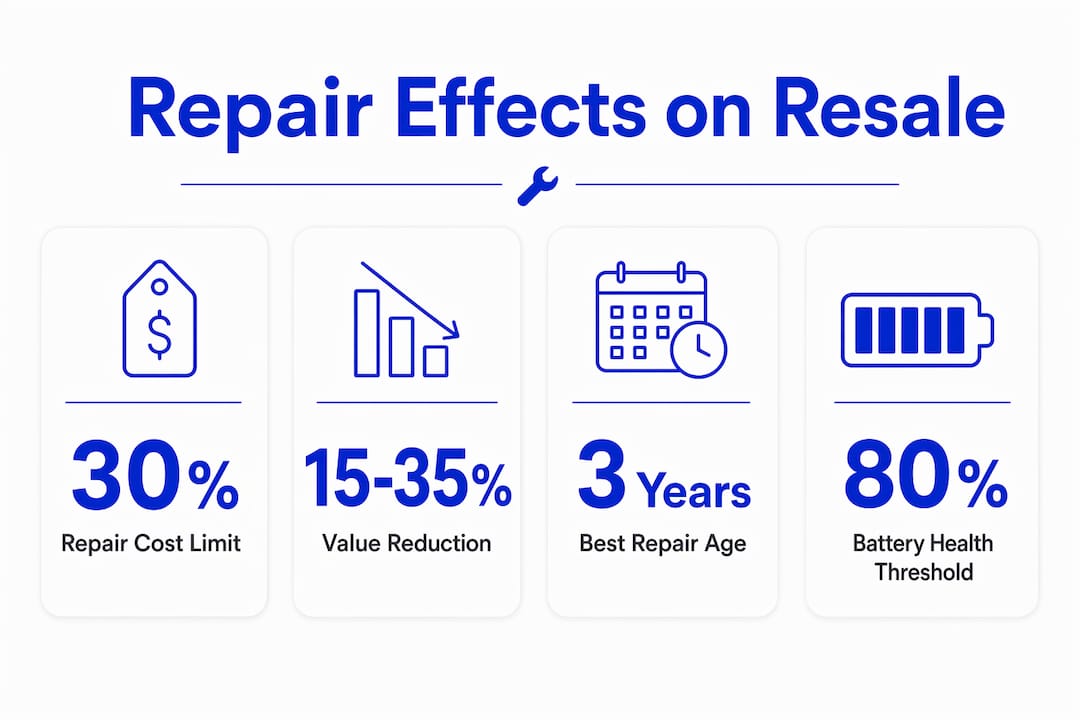
Screen repairs on devices less than three years old are among the most financially justified fixes before a sale. A cracked or dead display is the single most visible defect a buyer sees, and it immediately signals neglect. Screen repairs cost $90–$380 depending on the device model and parts used. When done with quality parts by a professional, a screen repair can recover a significant portion of that cost in the form of a higher resale price and a faster sale. The key word is “quality.” A screen replaced with a dim, low-touch-sensitivity aftermarket panel can actually lower buyer confidence compared to a cracked original.
Battery replacements
Battery health is the second thing serious buyers check, often before they even look at the screen. A phone showing 75% battery health on an iPhone or a similar Android metric is a negotiating liability. Battery replacements cost $40–$150 and are one of the most cost-effective repairs before a sale. If battery health sits below 80%, replacing it boosts buyer confidence and speeds up the transaction. The math is straightforward: a $60 battery replacement on a device you want to sell for $400 is almost always worth it.
Major repairs
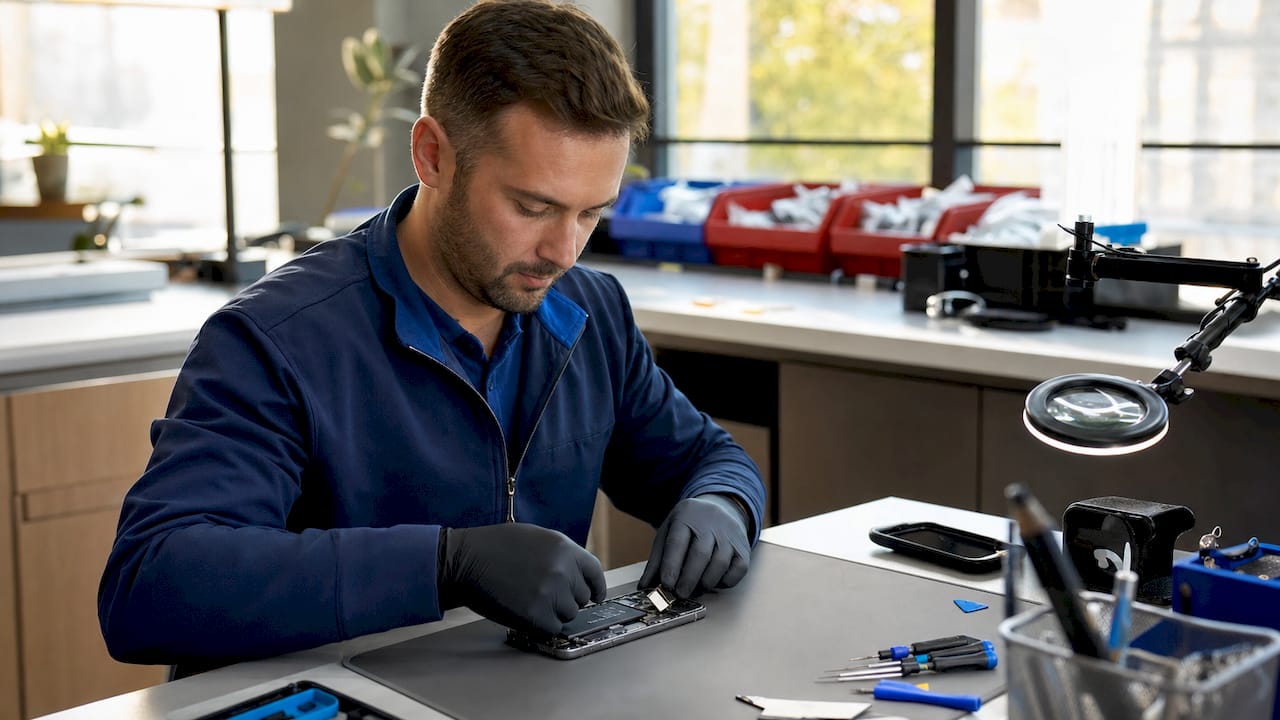
Major repairs tell a different story. Motherboard replacements, water damage remediation, and frame repairs rarely recoup their costs at resale. These repairs signal a device that has experienced serious trauma. Even after a technically successful fix, improper or complex repairs can damage secondary features like water resistance and sensor calibration. Buyers and professional appraisers know this, and they price accordingly.
- Screen repair: High resale value recovery if done with quality parts on a device under three years old.
- Battery replacement: Strong return on investment when battery health is below 80%; improves sale speed.
- Camera or speaker repair: Moderate impact; buyers notice functional defects immediately.
- Motherboard or logic board repair: Low financial return; signals serious prior damage.
- Water damage repair: Rarely worth the investment before sale; triggers deep discounts regardless of repair quality.
Pro Tip: Before any repair, check the current resale price of your specific device model on platforms like Swappa or eBay’s completed listings. That number is your ceiling. Work backward from there.
What financial thresholds help decide whether to repair or sell a device as-is?
The repair-versus-sell decision comes down to a ratio, not a gut feeling. Two rules define the threshold.
- The 30% rule. Repair costs should be less than 30% of the device’s current market value before the repair makes financial sense. If your phone is worth $300 and a screen repair costs $120, that is 40% of current value. The math does not work.
- The 50% replacement rule. Repair costs should also stay under 50% of what a comparable replacement device costs. Spending $200 to repair a phone when a similar refurbished model sells for $350 is a losing position.
- The lifespan test. Ask how many more months of useful life the repair buys. A $100 repair that extends a device’s life by 18 months costs roughly $5.50 per month. That is a reasonable investment. The same repair on a device that will be obsolete in six months is not.
- The trade-in trap. Trade-in programs pay less than private resale because professional buyers have wholesale access to cheaper parts and labor. Repairing a device specifically to trade it in almost never pays off. Private resale is where repair investment has the best chance of returning value.
- The as-is option. Selling a broken device as-is is a legitimate strategy. Some buyers specifically seek damaged devices for parts or DIY repair. Pricing it honestly and transparently often beats the cost of a repair that does not fully recover its investment.
| Scenario | Repair cost | Device value | Verdict |
|---|---|---|---|
| Screen crack, device under 2 years old | $120 | $500 | Repair. Cost is 24% of value. |
| Battery at 72% health | $60 | $350 | Repair. Strong ROI, fast sale. |
| Water damage remediation | $200 | $300 | Skip repair. Cost is 67% of value. |
| Motherboard replacement | $250 | $400 | Skip repair. Margin too thin. |
| Cracked screen, device 4 years old | $130 | $180 | Sell as-is or for parts. |
Pro Tip: Use eBay’s “sold listings” filter to find the actual sale price of your device model in both working and broken condition. The difference tells you the real repair premium buyers are willing to pay.
Evaluating repair versus replacement requires the same logic whether you own a student laptop or a flagship smartphone. The ratio is the same. The device category changes the numbers, not the framework.
How does repair quality and documentation influence resale value and buyer trust?
The quality of repairs influences value as much as the existence of a repair, especially when it comes to OEM versus third-party parts. This is the detail most sellers overlook.
OEM parts are manufactured by or for the original device maker. They match the original specifications for brightness, touch sensitivity, battery chemistry, and fit. Third-party parts vary widely. Some are close to OEM quality. Many are not. Professional buyers scrutinize repair invoices for part authenticity, and aftermarket parts trigger automatic discounts or outright refusals from platforms like Decluttr and trade-in kiosks.
“Repair documentation can be viewed as a tangible asset enhancing buyer trust and resale price rather than just a receipt.” — Maximize Resale Value After Phone Repairs
Documentation is the proof layer. A repair receipt showing the shop name, date, parts used, and technician certification transforms a repaired device from a question mark into a known quantity. Repair documentation and service certifications build buyer confidence and reduce time to sale. Buyers who can see exactly what was fixed, with what parts, and by whom, have far less reason to negotiate aggressively on price.
- Keep every receipt. Store repair receipts digitally and physically. Include them in your sale listing.
- Note the parts used. OEM or certified parts should be explicitly stated in the receipt and your listing.
- Use authorized or certified repair shops. Apple Authorized Service Providers, Samsung-certified shops, and established local repair businesses carry more credibility than anonymous kiosks.
- Photograph the repair process. Before-and-after photos showing the defect and the finished repair add a layer of transparency that text alone cannot.
Pro Tip: When listing a repaired device, include the repair receipt as a photo in your listing. Buyers on Swappa and Facebook Marketplace respond visibly better to listings that show documentation.
Cheap repairs can reduce value lower than an unrepaired but functional device. A device with a mismatched screen color, uneven bezels, or a battery that drains faster than expected tells buyers the repair was done poorly. That perception is harder to overcome than a disclosed crack.
What nuanced factors should sellers consider about repairs and resale value?
The less obvious repair consequences are the ones that cost sellers the most money, because they are invisible until a professional appraisal.
Water resistance is the clearest example. Devices like the iPhone 15 series and Samsung Galaxy S24 series carry IP67 or IP68 ratings. A screen or battery replacement done without proper adhesive resealing strips that rating entirely. The buyer cannot see this. A professional appraiser can test for it. Using OEM parts and professional repairs preserves water resistance, sensor calibration, and warranty, which directly protects resale value. A cheap repair that voids an IP rating on a premium device can cost more in resale discount than the repair saved in upfront cost.
Sensor calibration is the second hidden risk. Face ID on iPhones depends on a precisely calibrated TrueDepth camera array. Replacing a screen without proper recalibration can degrade Face ID performance. Buyers who test this during inspection will either walk away or demand a significant discount.
| Factor | Professional repair | Cheap or DIY repair |
|---|---|---|
| Water resistance preserved | Yes, with proper resealing | Rarely; adhesive often skipped |
| Sensor calibration | Recalibrated post-repair | Often skipped or unavailable |
| OEM parts used | Standard practice | Varies widely |
| Resale stigma | Lower; documentation helps | Higher; triggers buyer skepticism |
| Appraisal discount | Minimal with documentation | 15%–35% reduction possible |
Repair stigma can reduce value by approximately 15% to 35% even after high-quality repairs, depending on the market segment. This is the uncomfortable reality of device resale. Some buyers simply will not pay full price for a repaired device regardless of quality. Disclosing repair history honestly is still the right move. Buyers who discover undisclosed repairs after purchase leave negative reviews, file disputes, and damage your seller reputation across platforms.
Key Takeaways
Repair quality and documentation determine whether a repair increases or decreases resale value. A professional fix with OEM parts and a receipt protects your price. A cheap fix with no paperwork can cost you more than the repair saved.
| Point | Details |
|---|---|
| Repair type matters most | Screen and battery repairs offer the best resale return; major repairs rarely recoup costs. |
| Use the 30% rule | Only repair if cost is under 30% of current device value and under 50% of replacement cost. |
| OEM parts protect value | Professional repairs with OEM parts preserve water resistance, sensors, and buyer confidence. |
| Documentation is a sales asset | Repair receipts and certifications reduce buyer skepticism and speed up the sale. |
| Repair stigma is real | Even quality repairs can reduce value by 15%–35%; disclose repair history honestly every time. |
What I’ve learned about repair decisions after years in the field
Most sellers make the same mistake: they repair first and calculate second. They spend $180 fixing a phone worth $220 because the cracked screen bothers them, not because the math supports it. The repair feels productive. The resale math does not lie.
The sellers who get the best outcomes treat repair as an investment decision, not a cosmetic one. They check the sold price of their device model before touching anything. They call a repair shop for a quote before committing. They ask one question: does this repair return more than it costs, including my time?
Documentation is the most underused tool in private resale. I have seen identical devices sell for meaningfully different prices based purely on whether the seller included a repair receipt. Buyers are not irrational. They are managing risk. A receipt removes risk. Removing risk removes the buyer’s justification for lowballing.
The one situation where I tell people to skip the repair entirely: when the device is more than four years old and the repair costs more than $100. At that age, the device is approaching the end of software support from Apple or Google. A repaired device with 18 months of OS updates left is not worth the same as a repaired device with four years ahead of it. Age and software longevity belong in your repair calculation, not just the hardware cost.
— Michael
Repair Genius brings expert repairs to your door in Orlando
If you are preparing a device for resale and want the repair done right, the quality of the technician matters as much as the quality of the parts.
Repair Genius provides same-day, on-site electronics repair in Orlando and Winter Park, Florida, with transparent pricing and no hidden fees. Technicians come to your location with OEM-grade parts for iPhones, Android phones, laptops, and tablets. Every repair is backed by over 10 years of experience and a commitment to data safety throughout the process. For sellers who want to protect their resale price, a documented professional repair from Repair Genius is the kind of paper trail that moves devices faster and at better prices. Book a same-day repair and get your device sale-ready without leaving your home.
FAQ
Does repairing a phone increase its resale value?
A repair increases resale value only when the repair cost stays below 30% of the device’s current market value and the fix addresses a defect that buyers can see or test. Battery and screen repairs on newer devices offer the strongest return.
Does repair history hurt resale value?
Repair history can reduce resale value by 15%–35% depending on the repair type and market segment, even after quality fixes. Transparent disclosure with documentation minimizes this discount and protects your seller reputation.
What repairs are worth doing before selling a device?
Screen repairs on devices under three years old and battery replacements when health is below 80% are the most cost-effective pre-sale repairs. Major repairs like motherboard or water damage fixes rarely recoup their cost at resale.
Should I use OEM or third-party parts for a repair before resale?
OEM parts preserve water resistance, sensor calibration, and buyer confidence, making them the better choice for any repair intended to protect resale value. Third-party parts trigger automatic discounts from professional buyers and trade-in platforms.
Is it better to trade in or sell privately after a repair?
Private resale returns more value after a repair because trade-in programs price in repair risk and pay wholesale rates. Repairing a device specifically for a trade-in almost never pays off financially.
Recommended
- Why Employee Devices Need Quick Repair: 2026 Guide
- Why Business Laptops Need Screen Repair: 2026 Guide
- Laptop Repair Before Replacement Checklist 2026
- Tablet Screen Repair & Swollen Battery Risks






3 thoughts on “How Repairs Shape Device Resale Value in 2026”
Comments are closed.