

Phone repair with a limited budget is defined as achieving reliable, quality device restoration while keeping total costs below the point where replacement becomes the smarter financial choice. Screen cracks, dead batteries, and failed charging ports are the three most common repair types, and each carries a distinct cost and complexity profile. The real decision is not just about the upfront price. It is about choosing between DIY kits, independent repair shops, and manufacturer service centers in a way that avoids repeat fixes and hidden costs. Get that calculation right, and you can extend your device’s life by one to two years without overspending.
What are typical costs for common phone repairs on a budget?
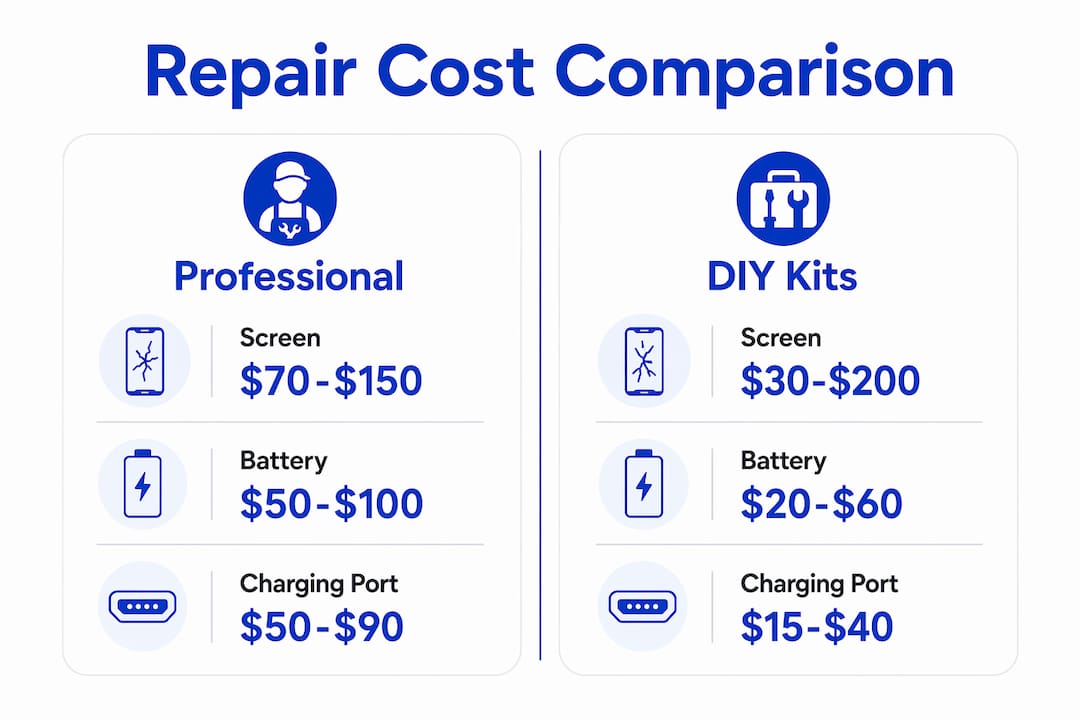
Screen repairs range from $70 to $150 professionally, while DIY kits cost $30 to $200 depending on the phone model. That spread is wide enough to matter. A $30 DIY kit for a mid-range Android is a genuinely different financial proposition than a $200 kit for a recent iPhone Pro model. Knowing where your device falls in that range is the first step in any budget phone fixing plan.
Battery replacement at a professional shop typically runs $50 to $100, and charging port repairs fall in a similar range. Camera module repairs can climb higher, often $80 to $150, because the components are more specialized. These figures give you a working baseline for setting realistic expectations before you walk into any shop or order a kit online.
Pro Tip: Ask for a written quote before authorizing any repair. A reputable shop will provide one without pressure, and it protects you from surprise charges after the work is done.
Turnaround time is another budget factor that most people overlook. Battery and port repairs complete in 30 to 90 minutes at independent shops, which means minimal downtime. Many of those shops also offer free diagnostics and a 90-day minimum warranty on parts and labor, with some extending to lifetime coverage on specific components. That warranty is real monetary value. A 90-day guarantee on a $80 battery replacement means you are not paying again if the part fails within that window.
| Repair Type | Professional Cost | DIY Kit Cost | Typical Turnaround |
|---|---|---|---|
| Screen replacement | $70–$150 | $30–$200 | 30–60 minutes |
| Battery replacement | $50–$100 | $20–$60 | 20–45 minutes |
| Charging port | $50–$90 | $15–$50 | 30–60 minutes |
| Camera module | $80–$150 | $40–$100 | 45–90 minutes |
DIY phone repair kits vs professional repair services: which suits your budget?
DIY repair is a legitimate money-saving strategy for the right device and the right repair. DIY battery replacement can save 50 to 70% compared to certified repair centers, which is a meaningful difference on a tight budget. The catch is that those savings assume the repair goes smoothly the first time, with no damaged components, no second kit order, and no professional rescue job afterward.
The real cost of DIY includes tools, failed parts, shipping delays, and learning time. These hidden costs can erode savings faster than most people anticipate. A basic toolkit for phone repair runs $15 to $40, and that cost is fixed regardless of whether the repair succeeds. Many users also underestimate the difficulty of glued components and special adhesives, which require heat mats and precise tools for safe removal and reassembly. A cracked screen on a Samsung Galaxy A-series phone is a reasonable DIY project. The same crack on an iPhone 15 Pro with Face ID is a different challenge entirely.
Modern flagship phones need specialized tools and software calibration that consumers simply cannot access. Face ID and ultrasonic fingerprint sensors require OEM calibration software to function correctly after a screen swap. Attempting those repairs without that software produces a phone with a working display and a broken biometric system. That outcome costs more to fix than the original repair would have.
Professional independent shops offer a strong middle ground. Independent shops run 25 to 40% cheaper than OEM service centers while maintaining ISO 9001-certified ESD-safe workspaces. They use aftermarket or certified refurbished parts that cost less than OEM components but still carry warranties.
Here is a practical framework for deciding which route fits your situation:
- Assess your device tier. Older or mid-range phones with modular designs are good DIY candidates. Flagship phones with glued assemblies and proprietary calibration are not.
- Identify the repair type. Battery swaps and charging port replacements are the most forgiving DIY repairs. Screen replacements and camera modules carry higher risk.
- Calculate total DIY cost. Add the kit price, tool cost, and a realistic estimate for one failed attempt. Compare that total to a professional quote.
- Check your warranty status. DIY repairs on phones still under manufacturer warranty will void that coverage. A professional repair from a certified shop may preserve it.
- Factor in downtime. A professional shop completes most repairs same-day. A DIY repair with a shipping delay for parts can leave you without a phone for a week.
Pro Tip: If you decide to go DIY, choose certified refurbished parts over the cheapest aftermarket option. Refurb parts undergo inspection and testing, come with warranties, and reduce the risk of a second repair.
How to decide if repairing or replacing your phone makes financial sense
The clearest financial guideline in phone repair is this: repair costs exceeding 65% of device resale value make replacement the smarter choice. A phone worth $200 on the resale market should not receive a $140 repair. At that point, the math favors trading in and upgrading, especially if the device has other wear issues that will surface soon.
Software support status is the second variable. A phone that no longer receives operating system updates is a security liability regardless of its physical condition. Repairing a device that Android or Apple has dropped from its update schedule extends the hardware life but not the security life. For most users, that is a meaningful distinction.
Use this checklist before committing to any repair:
- Get a free diagnostic first. Many independent shops offer free diagnostics to accurately assess damage before you commit to a repair cost. Never pay for a repair quote.
- Check resale value. Use trade-in estimators from carriers like Verizon, AT&T, or T-Mobile, or check platforms like Swappa and Decluttr for current market prices.
- Count the issues. A single cracked screen is a repair. A cracked screen plus a failing battery plus a damaged charging port on a three-year-old device is a replacement conversation.
- Review upgrade costs. Sometimes a carrier promotion or a certified refurbished replacement device costs only slightly more than a complex repair. Compare both options before deciding.
- Evaluate your battery replacement vs new phone math. A $70 battery replacement that gives you 18 more months of reliable use is almost always better than a $400 upgrade.
| Scenario | Recommended Action |
|---|---|
| Repair cost under 40% of resale value | Repair |
| Repair cost 40–65% of resale value | Repair if device has OS support |
| Repair cost over 65% of resale value | Replace or trade in |
| Multiple issues on an outdated device | Replace |
| Single issue, device still under warranty | Use warranty or certified shop |
How to find the best affordable phone repair deals without sacrificing quality
The lowest upfront repair price is rarely the true cheapest option. Cheap parts and unqualified technicians produce repeat failures, and a second repair on the same issue costs more than the original professional fix would have. Budget phone fixing done right means finding the best value, not the lowest number on the invoice.
Start with credentials. A reputable shop will display technician certifications, explain which parts they use, and provide a written warranty without being asked. Shops that hesitate on any of those three points are a risk. Transparency about parts sourcing is especially telling. Ask directly whether the replacement screen is OEM, certified refurbished, or generic aftermarket. Each carries a different price and a different failure rate.
Timing your repair can also reduce costs. Many independent shops run seasonal promotions around back-to-school periods in August and September, and around the holiday season in November and December. If your repair is not urgent, waiting two to three weeks for a promotion can save 10 to 20% on parts and labor.
Pro Tip: Check whether your phone is covered by a manufacturer warranty, carrier insurance plan, or a credit card purchase protection benefit before paying out of pocket. AppleCare+, Samsung Care+, and carrier insurance programs like Asurion cover screen and battery repairs at a fraction of the standard retail cost.
Manufacturer warranties and insurance programs are underused by budget-conscious phone owners. AppleCare+ covers two incidents of accidental damage per year with a service fee of $29 for screen damage. That is significantly less than the $129 to $329 Apple charges for out-of-warranty screen repairs on current iPhone models. If you have coverage, use it before paying retail.
For readers managing broader household finances, a monthly expense calculator can help you see exactly how a repair cost fits within your overall budget before committing. Knowing your available margin makes the DIY versus professional decision much cleaner.
Key takeaways
Quality phone repair on a limited budget requires matching the repair type and device value to the right service option, whether DIY or professional, to avoid repeat costs that erase any initial savings.
| Point | Details |
|---|---|
| Know your cost benchmarks | Screen repairs run $70–$150 professionally; battery replacements cost $50–$100 with a 90-day warranty. |
| DIY works for simple, modular repairs | Battery swaps on mid-range phones save 50–70%, but flagship repairs risk permanent damage without OEM tools. |
| Use the 65% rule | If repair cost exceeds 65% of resale value, replacing or trading in is the smarter financial move. |
| Free diagnostics before committing | Independent shops offer free assessments that prevent paying for unnecessary or overpriced repairs. |
| Quality parts prevent repeat costs | Certified refurbished parts with warranties cost more upfront but reduce total cost of ownership. |
Why cheap repairs often cost more in the long run
I have seen the same pattern repeat itself more times than I can count. Someone pays $40 for a no-name screen replacement, the touch sensitivity fails within six weeks, and they end up paying for a second repair that costs more than the quality fix would have the first time. A cheap repair that immediately fails is costlier long-term than paying more upfront for a trusted professional. That is not a sales pitch. It is arithmetic.
The part of this conversation that most budget guides skip is repair complexity. A battery swap on a Google Pixel 6a is genuinely accessible for a careful first-timer with a $25 kit and an iFixit guide. A screen replacement on a Samsung Galaxy S24 Ultra involves a glued display assembly, a curved edge, and an under-display fingerprint sensor that needs software pairing. Those are not the same repair, and treating them as equivalent is how people end up with a $300 mistake on a $600 phone.
My honest advice: use free diagnostics every time, without exception. Walk into a shop, describe the problem, and let a technician confirm the diagnosis before you authorize anything. That single step eliminates unnecessary repairs and gives you a real number to compare against replacement cost. Pair that with the 65% rule and a quick check of your device’s software support status, and you have a decision framework that works for almost every situation. The goal is not to spend the least money today. It is to spend the right amount of money once.
— Michael
Get expert phone repair without the guesswork
Repair Genius brings certified technicians directly to your location in Orlando and Winter Park, Florida, so you never have to choose between convenience and quality. Every repair starts with a free diagnostic, uses approved parts backed by warranty, and comes with transparent pricing that shows you the full cost before any work begins.

Whether you are dealing with a cracked screen, a battery that will not hold a charge, or a charging port that stopped working, Repair Genius handles it the same day with no hidden fees. For budget-conscious repairs that hold up over time, book your repair service with Repair Genius and see why Orlando residents consistently choose quality they can afford. You can also explore affordable device repair options that cover everything from iPhones to Android devices without the sticker shock.
FAQ
How much does a typical phone screen repair cost on a budget?
Screen repairs at professional independent shops range from $70 to $150, while DIY kits cost $30 to $200 depending on the phone model. Independent shops run 25 to 40% cheaper than OEM service centers and typically include a 90-day warranty on parts and labor.
When does DIY phone repair actually save money?
DIY repair saves money on simple, modular repairs like battery replacements on older or mid-range phones, where savings of 50 to 70% are realistic. For flagship phones with glued assemblies or biometric sensors, DIY attempts risk permanent damage that costs more to fix than a professional repair would have.
How do I know if I should repair or replace my phone?
If the repair cost exceeds 65% of your phone’s current resale value, replacement or trade-in is the better financial decision. Also factor in whether the device still receives operating system security updates, since a repaired phone without software support is a security risk.
Are free phone diagnostics actually free?
Yes. Most reputable independent repair shops offer free diagnostic assessments with no obligation to proceed with the repair. Getting a free diagnostic before authorizing any work is the single most effective way to avoid overpaying or paying for an unnecessary fix.
What type of replacement parts should I ask for?
Ask for OEM or certified refurbished parts rather than the cheapest generic aftermarket components. Certified refurbished parts undergo inspection and testing, come with warranties, and have a lower failure rate that reduces your total cost of ownership over time.
Recommended
- Laptop Repair Before Replacement Checklist 2026
- iPhone Battery Replacement vs Buying New | Repair Guide
- Tablet Screen Repair & Swollen Battery Risks
- Affordable Device Repair in Orlando











2 thoughts on “Phone Repair with a Limited Budget: Smart Fixes That Last”
Comments are closed.