
Repair is the smarter financial choice when the phone repair vs replacement cost ratio stays below 50% of your device’s current market value. A cracked screen on a flagship phone costs $180–$380 to fix, while buying a comparable new device runs $700–$1,200 or more. Battery swaps land between $40 and $150. Those numbers alone tell most of the story, but the full decision also involves software support cycles, hidden setup costs, and trade-in value. Repair Genius has handled these evaluations for over 10 years, and the right answer almost always comes down to a few concrete numbers.
What are typical phone repair and replacement costs in 2026?
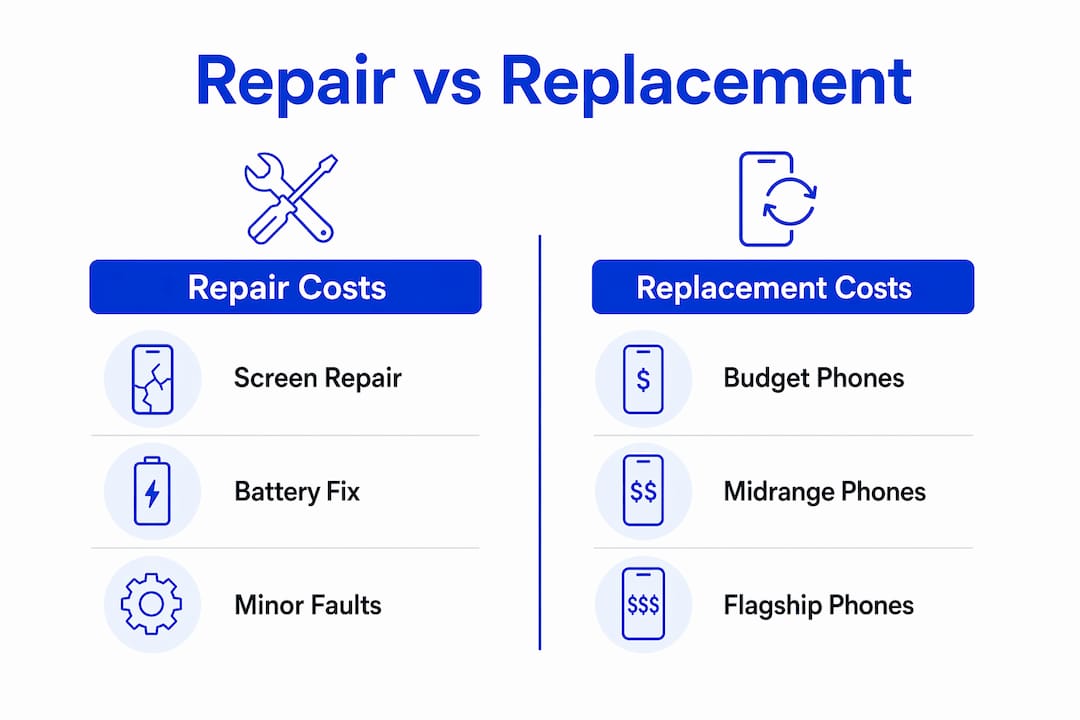
Screen repair costs vary sharply by device tier. Flagship screens cost $180–$380 to replace, midrange screens run $90–$220, and budget screens fall between $60 and $140. Battery replacements cost $40–$150 across all tiers. Charging port repairs typically land in the $60–$120 range depending on the model.
Replacement phone prices follow a similar tier structure. Budget models start around $300–$350. Midrange devices run $300–$700. Flagship phones start at $700 and regularly exceed $1,200. Those are retail prices before you factor in accessories, activation, and carrier plan changes.

| Repair Type | Budget Tier | Midrange Tier | Flagship Tier |
|---|---|---|---|
| Screen replacement | $60–$140 | $90–$220 | $180–$380 |
| Battery replacement | $40–$80 | $60–$110 | $80–$150 |
| Charging port repair | $60–$80 | $70–$100 | $90–$120 |
| New device cost | $300–$350 | $300–$700 | $700–$1,200+ |
The table makes the financial gap obvious. A $120 screen repair on a midrange phone is a fraction of the $400–$500 it would cost to replace it. The math shifts only when repair costs climb toward or past that 50% threshold.
How to apply the 50% rule and other financial heuristics
The 50% rule is the most widely used benchmark in device repair decisions. If the repair cost exceeds half the phone’s current market value, replacement typically delivers better long-term value. A phone worth $400 on the used market should not receive a $250 repair unless that repair extends its life by several years.
The annualized cost of use method adds more precision. Divide the repair cost by the number of months you expect to keep the phone afterward. Then compare that monthly figure against the amortized cost of a new device spread over its expected lifespan. If repair cost per month is noticeably lower than the amortized new phone cost, repair wins financially.
Key factors to weigh alongside the 50% rule:
- Trade-in credit: Even a damaged phone can qualify for trade-in credit, which reduces the net cost of a replacement. Factor this in before assuming replacement is too expensive.
- Repair warranty: A reputable repair provider should offer a warranty on parts and labor. A 90-day or longer warranty changes the risk calculation significantly.
- Insurance coverage: If you carry device insurance, your out-of-pocket repair cost may be a flat deductible, often $29–$99, which almost always beats replacement.
- Resale value after repair: A repaired phone in good condition holds more resale value than a cracked one, which matters if you plan to upgrade within a year.
Pro Tip: Before accepting any repair quote, check your phone’s current resale value on a major used-device marketplace. That number is your 50% threshold. If the quote exceeds half that figure, get a second opinion or price out a certified refurbished replacement.
What hidden costs and factors impact repair vs replacement decisions?
Replacing a phone costs more than the sticker price. Data migration and setup often require several hours of downtime. App reauthentication, two-factor authentication resets, and reconfiguring preferences add friction that most buyers underestimate. For professionals or anyone who depends on their phone for work, that downtime has a real dollar value.
Hidden replacement costs also include physical accessories and plan changes. New phones often require new cases, screen protectors, and sometimes a costlier carrier plan. Total replacement expense climbs quickly once those line items stack up.
Software support lifecycle is a factor that cuts both ways:
- Repair advantage: A phone under 3–4 years old with active software support is worth repairing. Fixing it extends a device that still receives security patches and OS updates.
- Replacement signal: A phone approaching end of software support presents a security risk even after a successful repair. Extending its life past that cutoff means running an unpatched OS.
- OEM vs. third-party repair: OEM repairs preserve factory warranties and water resistance ratings but cost 30–50% more than third-party repairs. Third-party repairs save money but may void the manufacturer warranty.
- Data integrity risk: Certain repairs, particularly motherboard-level work, carry a small risk of data loss. Backing up before any repair is non-negotiable.
Pro Tip: Water damage is a special case. Internal corrosion from liquid exposure causes unpredictable failures weeks or months after an initial repair. Treat water-damaged phones as high-risk and get a professional assessment before committing to repair costs.
When is repair usually the better choice, and when is replacement wiser?
The answer depends on device age, fault type, and remaining software support. Phones under 3–4 years old with isolated issues are almost always worth repairing. A single cracked screen or a degraded battery is a contained problem with a predictable fix cost.
| Scenario | Repair or Replace? | Reason |
|---|---|---|
| Cracked screen, phone under 2 years old | Repair | Low cost relative to device value |
| Battery degraded below 80% capacity | Repair | Battery swaps are low cost and high impact |
| Motherboard failure on any device | Replace | Repair cost typically exceeds device value |
| Multiple simultaneous faults | Replace | Compounding repair costs erode the financial case |
| Phone over 4 years old, near end of software support | Replace | Security risk outweighs repair savings |
| Water damage with internal corrosion | Replace | Long-term reliability is unpredictable |
| Flagship phone with single fault, under 3 years old | Repair | High device value makes repair clearly cheaper |
Repair also carries an environmental advantage that replacement cannot match. Manufacturing a new smartphone consumes significant raw materials and energy. Extending a device’s life by even one or two years through repair reduces that environmental load. For consumers who factor sustainability into their decisions, repair is the lower-impact choice in most single-fault scenarios.
Replacement makes sense when a device has multiple faults, has reached end of software support, or when the repair estimate approaches or exceeds the 50% threshold. Motherboard failures are the clearest replacement signal. Repair costs for motherboard-level damage routinely exceed the phone’s market value.
Practical steps for evaluating your repair vs replacement options
A structured approach prevents costly mistakes. Work through these steps before committing to either path:
- Check your phone’s current market value. Search completed listings on a major used-device marketplace for your exact model and condition. This is your baseline for the 50% rule.
- Get at least two repair quotes. One from an OEM-authorized provider and one from a reputable independent shop. The price gap often reveals whether OEM protection is worth the premium for your situation.
- Calculate the annualized cost. Divide the repair quote by the months you expect to use the phone after repair. Compare that figure to a new or refurbished device amortized over 24–36 months.
- Factor in trade-in value. Contact your carrier or a certified trade-in program to get a quote on your current device, even damaged. Subtract that credit from the replacement cost before comparing.
- Check software support status. Confirm whether your device still receives OS updates. A phone approaching end of support has a shorter useful life, which changes the repair math.
- Review your insurance or warranty coverage. A deductible-based claim often makes repair the obvious choice. Check your policy before paying out of pocket.
For consumers working with a tight budget, smart repair strategies can extend a device’s life without overspending. Knowing which repairs are worth prioritizing and which to skip is a skill that pays off over multiple device cycles. Before booking any repair, review common repair red flags to avoid providers who cut corners on parts or labor.
Key takeaways
Repair beats replacement financially in most single-fault scenarios when the cost stays below 50% of the device’s current market value and the phone still receives software updates.
| Point | Details |
|---|---|
| Use the 50% rule | If repair exceeds half the phone’s market value, replacement usually delivers better value. |
| Factor in hidden costs | Data migration, accessories, and plan changes add real expense to any replacement decision. |
| Check software support | Repairing a phone past its update support window creates security risks that offset savings. |
| OEM vs. third-party repair | OEM repairs cost 30–50% more but preserve warranties; third-party saves money with some trade-offs. |
| Annualized cost method | Divide repair cost by expected months of use and compare against amortized new device cost. |
The real cost most people ignore
Most people frame this as a simple price comparison: repair quote versus new phone price. That framing misses the most expensive part of replacement for a lot of consumers.
I have seen customers spend $800 on a new flagship, then spend a full weekend recovering accounts, re-downloading apps, and rebuilding notification settings. That is not a financial cost that shows up in any comparison chart, but it is real. For someone running a small business off their phone, two days of disruption can cost more than the phone itself.
My honest position is that repair is undervalued because the friction of the process makes people assume it is complicated. A cracked screen or a dead battery is a one-hour fix in most cases. A new phone is a two-day project. When you account for that time honestly, the repair case gets stronger for almost every single-fault scenario on a device under three years old.
The environmental argument also matters more than most people admit. Choosing repair over replacement is one of the most direct ways an individual consumer can reduce their electronics footprint. That is not a minor point. It is a concrete, measurable benefit that costs you nothing extra when repair is already the cheaper option.
Where I do push people toward replacement is on water damage and motherboard failures. Both carry unpredictable failure modes that make repair a gamble rather than a solution. In those cases, a certified refurbished device at the midrange tier is almost always the better call.
— Michael
Repair Genius brings expert service to your door
Repair Genius serves Orlando and Winter Park with on-site repairs that come to you, so there is no drop-off, no waiting, and no disruption to your day. Technicians handle iPhone screens, Android batteries, charging ports, and more, often completing repairs the same day with transparent pricing and no hidden fees.

Repair Genius has over 10 years of experience helping customers make the repair-or-replace call with confidence. Whether you need a quick battery swap or a full screen replacement, the electronics repair service covers the most common device issues at a fraction of new phone prices. If you are unsure whether your device is worth fixing, a Repair Genius technician can assess it on the spot and give you an honest answer before any work begins.
FAQ
What is the 50% rule for phone repair?
The 50% rule states that if a repair costs more than half the phone’s current market value, replacement is usually the better financial choice. It is the most widely used benchmark among repair professionals.
How much does a phone screen repair cost in 2026?
Screen repair costs range from $60 for budget devices to $380 for flagship models. Midrange screen repairs typically fall between $90 and $220.
Is it cheaper to repair or replace a phone battery?
Battery replacement costs $40–$150 depending on the device, making it almost always cheaper than buying a new phone. A battery swap is one of the highest-value repairs available for any smartphone.
What hidden costs come with replacing a phone?
Replacement adds costs beyond the device price, including cases, screen protectors, data migration time, app reauthentication, and sometimes a higher carrier plan. These extras can add hundreds of dollars to the true cost of a new phone.
When should I replace instead of repair my phone?
Replace your phone when it has multiple simultaneous faults, a motherboard failure, water damage with internal corrosion, or when it has reached end of software support. In those cases, repair costs and reliability risks outweigh the savings.
Recommended
- Phone Repair with a Limited Budget: Smart Fixes That Last
- iPhone Battery Replacement vs Buying New | Repair Guide
- Repair vs Replace Student Laptop: 2026 Guide
- Laptop Repair Before Replacement Checklist 2026